Why EU enlargement matters again: the strategic case for finishing what was started
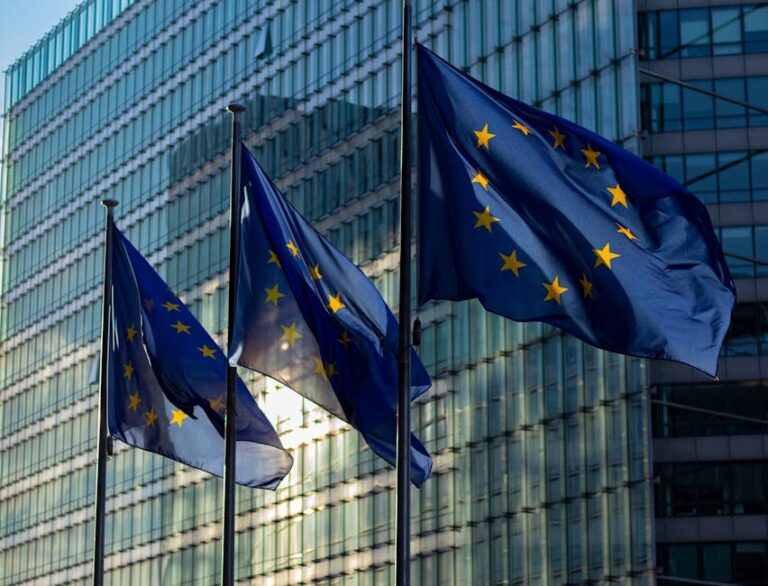
For most of the 2010s, EU enlargement was a polite fiction. Candidate countries did the work — sometimes for decades — and the bloc looked the other way. After 2022, that changed. Ukraine and Moldova were granted candidate status in record time. Western Balkan accession negotiations, frozen for years, restarted. Georgia’s path is more complicated, but it remains formally on the table. Enlargement is back on Europe’s agenda — and not a moment too soon.
The strategic case
The case for enlargement rests on three propositions, each strengthened by the post-2022 environment. First, geopolitics: leaving the Western Balkans, Ukraine, Moldova, and Georgia in a grey zone between the EU and external influence is now patently dangerous. Second, economic integration: these countries are already deeply tied to the European single market — formal accession would convert dependence into rules-based partnership. Third, institutional credibility: the EU’s foreign policy claims rest on whether the bloc honours commitments to candidates that have done what was asked of them.
The hardest case: Ukraine
Ukraine is the most consequential — and the most legally complex — accession candidate in EU history. The country’s economy, agriculture, demographic weight, and ongoing security situation make it qualitatively different from the post-2004 enlargements. Membership would reshape the Common Agricultural Policy, regional funds, and the Council’s decision-making arithmetic. Reform has continued in wartime, faster in some areas (anti-corruption infrastructure, judicial reform) than in others. The honest answer is that Ukraine’s accession is years, not months, away — but the strategic logic of the path is now beyond serious dispute.
The Western Balkans, again
The six Western Balkan partners — Albania, Bosnia and Herzegovina, Kosovo, Montenegro, North Macedonia, Serbia — have been in candidate or potential candidate status for, in some cases, more than two decades. The result of the long delay is now visible: parts of the region are tilted toward external partners, populations are sceptical that the EU is serious, and reform fatigue is widespread. The 2024 Growth Plan and the methodology revisions have changed the architecture; the political will to deliver still has to follow.
Moldova: the closest to feasibility
Moldova’s accession path is, paradoxically, both the most accelerated and the most exposed to external interference. The country’s progress on judicial reform and anti-corruption is genuine; its proximity to Russia and the unresolved status of Transnistria make it a vulnerability the EU cannot afford to ignore. A faster Moldovan accession would be a strategic gain in its own right and a signal to the wider neighbourhood.
The internal opposition
Enlargement faces opposition inside the EU. Budget concerns are real: bringing in new members increases pressure on the cohesion and agriculture budgets. Decision-making concerns are real too: a Union of 33 members will need to confront unanimity in foreign policy and rule-of-law matters. Political concerns, particularly in member states where enlargement is unpopular, will require leadership rather than deference to polls. None of these are reasons to abandon the project. They are reasons to manage it competently.
The choice
Enlargement is, in the end, a choice about what kind of European Union exists in 2035. A Union that completes the project of bringing in the Western Balkans, Ukraine, Moldova, and possibly Georgia will be larger, more complex, and strategically more substantial. A Union that does not will look, to its neighbourhood and to the wider world, as a project that promised more than it could deliver. The 2026 cycle of accession reports will tell us which trajectory governments are actually choosing — and whether the post-2022 momentum can be sustained.