
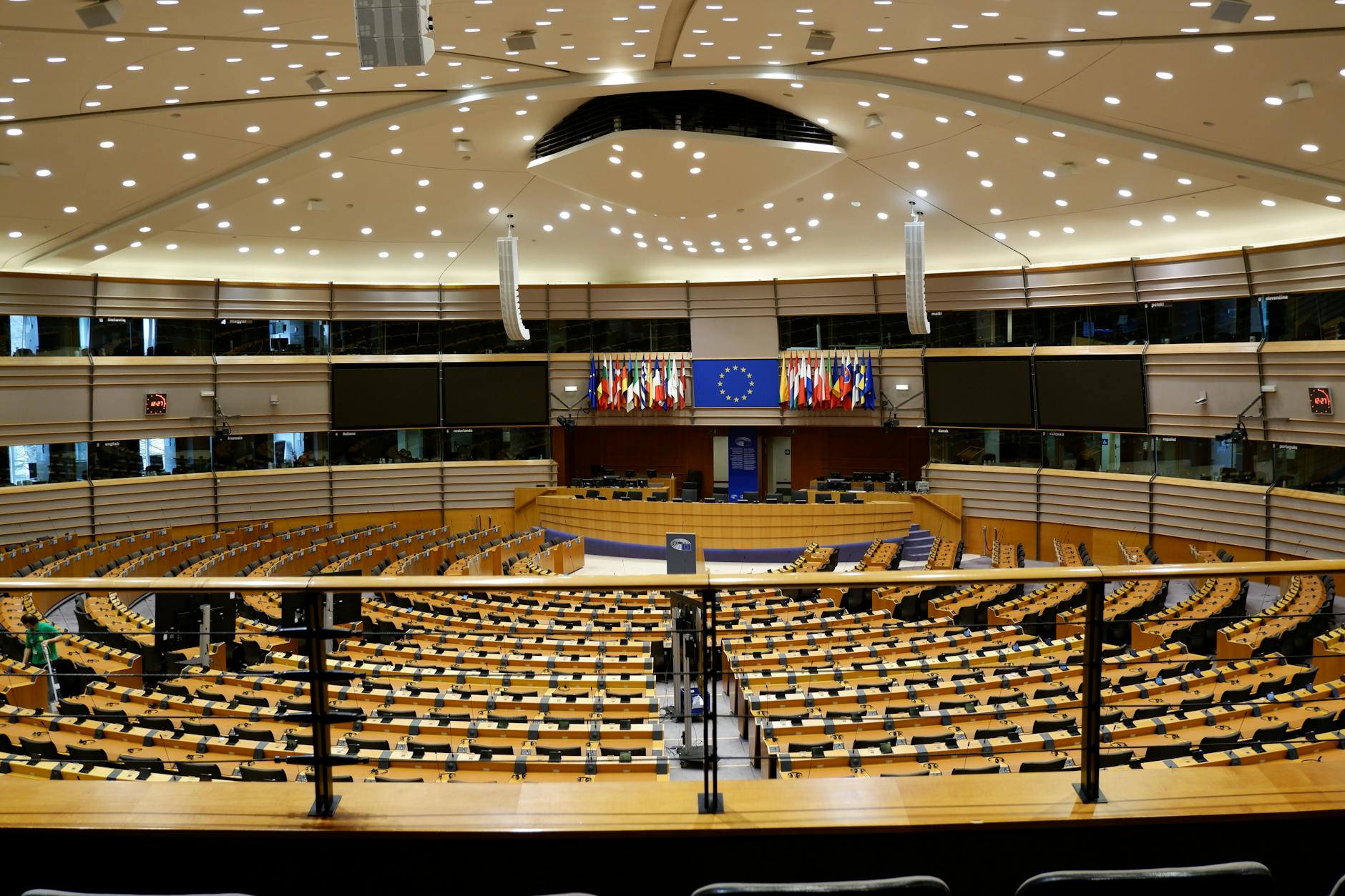
MEPs debate single market overhaul to remove barriers, boost SMEs and restore EU competitiveness
Strasbourg – The European Parliament debates this week with representatives of the Commission and Council a comprehensive plan to remove barriers in the single market, improve conditions for European businesses, and ensure their competitiveness in the global arena. The debate is one of the most anticipated of the 18-21 May plenary session and follows the publication of the Letta and Draghi reports on European competitiveness in 2024-2025.
Both reports — by former Italian Prime Ministers Enrico Letta and Mario Draghi respectively — converged on a stark diagnosis: the single market, conceived in 1992 and progressively expanded since, has failed to keep pace with the global competitiveness challenge posed by the United States and China. The Draghi report estimated that the productivity gap with the US has now reached approximately 30 percentage points and continues to widen.
Five priority areas for reform
The Commission, Council and Parliament have converged on five priority areas for action:
- Capital markets union — completing the integration of European capital markets, currently fragmented across 27 jurisdictions, to enable European companies (particularly SMEs and scale-ups) to access equity financing comparable to that available in the US
- Mutual recognition of professional qualifications — speeding up the recognition process to enable workers to move freely between Member States
- Digital infrastructure — accelerating the deployment of high-capacity networks (5G/6G, fibre, data centres) and ensuring interoperability of public-sector digital services
- Energy market integration — coupling electricity markets, accelerating grid investments, and ensuring competitive pricing for industrial users
- Reduction of administrative burden for SMEs — implementing the “SME relief package” proposed by the Commission in 2024, including simplified reporting obligations and a unified single digital window for cross-border business registration
The competitiveness question
European Small and Medium Enterprises (SMEs) represent 99% of all EU businesses and provide approximately two-thirds of private-sector employment. Yet, they face significantly higher compliance costs relative to their US and Chinese counterparts, and limited access to growth capital remains a structural bottleneck.
According to the European Investment Bank, European tech scale-ups receive on average 3 to 4 times less venture capital funding than equivalent companies in the US. This funding gap is repeatedly identified as the main reason why European tech success stories (Spotify, Klarna, Mistral AI, etc.) tend to relocate operations or IPOs to American capital markets.
Political momentum and obstacles
The reform agenda enjoys broad cross-party support in Parliament, though the precise sequencing and the balance between market integration and social protection remain contested. Member States with strong national industrial champions (France, Germany, Italy) have shown willingness to compromise on regulatory harmonisation, while smaller and more open economies (Netherlands, Ireland, Sweden) push for accelerated implementation.
The outcome of this week’s debate will shape the legislative agenda for the second half of 2026 and the 2027 work programme.