Eurozone Inflation Confirmed at 3.0% in April, ECB Holds Rates at 2%
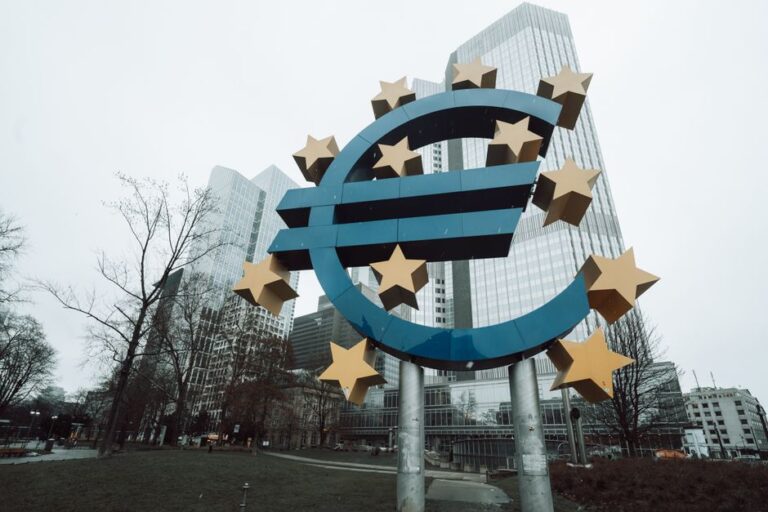
Eurostat confirmed today, 20 May 2026, that annual inflation in the euro area reached 3.0% in April, up from 2.6% in March and the highest reading since September 2023. The figure is significantly above the European Central Bank’s 2.0% target and reflects a sharp acceleration in energy prices linked to the Iran war. The ECB held its three key interest rates unchanged on 30 April, with the deposit facility rate at 2.00%.
Energy drives the surge
The breakdown of the harmonised index of consumer prices reveals that energy was overwhelmingly the largest contributor to the acceleration. Energy prices rose 10.8% in April compared with the same month a year earlier, the sharpest annual increase since February 2023, driven by Middle East conflict-related supply constraints. The figure represents a doubling from March’s 5.1% energy inflation reading.
Inflation in non-energy industrial goods also picked up, rising to 0.8% in April from 0.5% in March, while food, alcohol and tobacco inflation reached 2.4% (broadly stable compared with March). Services inflation moderated to 3.0% from 3.3% the previous month. The core rate, which excludes energy, food, alcohol and tobacco, eased slightly to 2.2% from 2.3%.
National divergences widen
Among the euro area’s largest economies, inflation accelerated in Germany (to 2.9%), France (to 2.5%), Italy (to 2.9%) and Spain (to 3.5%). The differential between the highest and lowest national readings has widened materially since the start of the Iran war, with the periphery economies more exposed to energy-price pass-through than the core. Across the EU, Romania and Croatia continue to record the highest annual rates, while Denmark, Czechia, Cyprus and Sweden are the lowest.
The ECB’s holding pattern
The European Central Bank’s Governing Council, meeting on 30 April, left the three key ECB interest rates unchanged. The decision marked the seventh consecutive hold after the cuts in 2025. According to the official statement, while the incoming information has been broadly consistent with the previous assessment of the inflation outlook, the upside risks to inflation and the downside risks to growth have intensified.
President Christine Lagarde, speaking at the press conference following the decision, indicated that the choice to hold was taken unanimously and that a possible rate hike had been discussed at length. The Governing Council stands ready to adjust all of its instruments to ensure inflation stabilises at 2% over the medium term. Lagarde also reiterated her intention to remain in post despite recent speculation, telling Bloomberg TV: “This captain is not going to leave the ship, because I see clouds.”
Stagflation concerns mount
The combination of accelerating inflation and weak growth has revived stagflation concerns for the first time since the early 1980s. Eurozone GDP expanded by a meagre 0.1% in the first quarter of 2026, according to preliminary data. Economists at Berenberg warned that the Iran war is now “battering European economies” and that the Strait of Hormuz remaining largely closed will likely produce a bout of stagflation across both the Eurozone and the United Kingdom.
The next Eurogroup meeting takes place on 22 May 2026, followed by an informal meeting of economic and financial affairs ministers on 22-23 May, where the macroeconomic outlook and the appropriate policy mix between fiscal and monetary instruments are expected to dominate the discussions.
Sources: Eurostat HICP release for April 2026 (20 May 2026); ECB press release on monetary policy decisions (30 April 2026); Berenberg analysis; CNBC; Trading Economics.