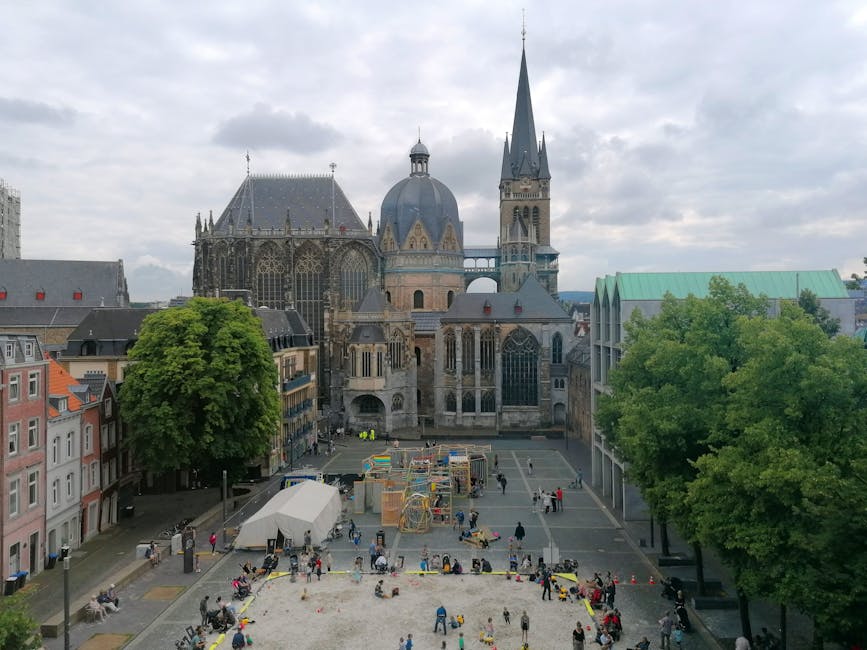
Charlemagne Youth Prize Crowns Three European Laureates in Aachen
The three European laureates of the 2026 European Charlemagne Youth Prize will be unveiled on Tuesday 12 May 2026 at a ceremony in Aachen, Germany — the symbolic city of European unification where the senior Charlemagne Prize is traditionally awarded on Ascension Day.
From 531 applications to 27 national winners
The prize, run jointly by the European Parliament and the Foundation of the International Charlemagne Prize of Aachen, drew 531 applications from across the 27 Member States this year. National juries selected one nomination per country, producing 27 national winners, all of whom are invited to Aachen for the ceremony. From this field, a European jury chooses the three top laureates. The competition is open to projects led by young people aged 16-30 who reside in an EU Member State.
Up to EUR 7,500 — and a Schuman traineeship
The first prize is endowed with EUR 7,500, the second with EUR 5,000, and the third with EUR 2,500. As part of the prize, the three European laureates are invited to visit the European Parliament in Brussels or Strasbourg, and one representative of each winning project may take up a Schuman traineeship at the European Parliament. Past laureates have included youth exchanges, sports and arts events, online projects and educational initiatives — all united by their contribution to a shared European identity and active citizenship.
The wider Charlemagne Prize context
The prize sits alongside the senior International Charlemagne Prize of Aachen, awarded since 1950 for outstanding service to European unification. Past laureates include Winston Churchill, George C. Marshall, Pope John Paul II, Angela Merkel and, in absentia in 2022, Belarusian civil rights activist Maria Kalesnikava — who was released from political imprisonment in December 2025 and personally received the prize at a special ceremony in Aachen on 14 March 2026.
A youth dimension to European integration
The Charlemagne Youth Prize, created in April 2008, has now received more than 7,150 project applications over its 18-year run. Its profile has grown in step with EU efforts to embed civic and democratic engagement among the next generation, including through the parallel Erasmus+ programme, on which Member States approved a partial negotiating mandate for the 2028-2034 period on Monday. The ceremony in Aachen falls during the same week the European Parliament will hear from Latvian Prime Minister Evika Siliņa in the “This is Europe” debate series.
What the laureates take home
Beyond the cash prize and the institutional visits, the recognition routinely accelerates youth-led projects from grassroots initiatives toward EU funding pipelines and cross-border partnerships. The 2026 winners, to be announced at the Coronation Hall of Aachen Town Hall, will join a roster that frames Europe’s democratic project as a continuing youth enterprise — not a heritage exercise.