France Plans Nationwide Blackout Drill to Test Emergency Readiness Ahead of 2027
France is preparing to conduct a nationwide simulated blackout exercise by 2027, a move designed to stress-test the country’s emergency response systems at a time when climate-related disasters are placing growing pressure on governments to demonstrate preparedness. The drill, according to reports, would simulate a large-scale power outage and examine how public institutions, infrastructure operators, and ordinary citizens respond when the lights go out.
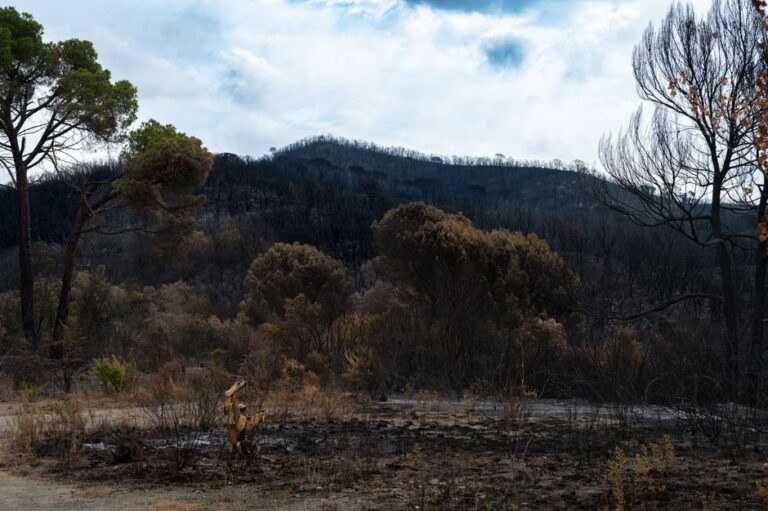
The initiative reflects a broader shift in European emergency planning, driven in part by a string of extreme weather events in recent summers. Wildfires across southern France, record-breaking heatwaves, and disruptions to critical infrastructure have made resilience a pressing political concern, prompting authorities to move beyond theoretical planning and into practical, large-scale exercises.
Officials said the exercise is intended to identify weaknesses in France’s crisis management chain — from national coordination centres down to local municipalities and emergency services. A blackout scenario was chosen, according to reports, because it carries cascading consequences: hospitals relying on backup power, disrupted communications, and the potential for public disorder in dense urban areas.
Resilience Planning Moves Up the Political Agenda
The announcement comes as several European nations have begun revisiting Cold War-era civil defence frameworks, updating them for a threat landscape dominated less by geopolitical confrontation and more by climate volatility, cyberattacks, and infrastructure fragility. Sweden, Finland, and the Netherlands have all taken steps in recent years to reintroduce public preparedness campaigns, distributing guidance on how households should cope during extended emergencies.
France’s planned drill would be one of the more ambitious exercises undertaken in Western Europe, testing not only government and utility providers but also the general population’s capacity to function without electricity for an extended period. Reports suggest the scenario may involve coordinated participation from energy firms, transport authorities, and health services, with the aim of mapping dependencies that are often invisible during normal operations.
The political backdrop matters. Successive summers of wildfires in the Gironde region and the Provence-Alpes-Côte d’Azur have forced emergency services to their limits, exposing gaps in resource allocation and inter-agency communication. Extreme heat events have also strained the electricity grid itself, as air-conditioning demand surges at precisely the moments when generation and transmission infrastructure faces its greatest stress.
European Union frameworks for civil protection and energy security are likely to inform the exercise design, with France expected to share findings with partner states and the European Commission. Analysts have noted that no single country’s grid operates in isolation — a major failure in France could have knock-on effects across interconnected networks in Spain, Germany, and beyond, making cross-border coordination a central element of any realistic preparedness strategy.
Whether the drill will translate into lasting institutional reform or remain a high-profile one-off remains an open question. Critics of past emergency exercises in various European countries have pointed to a pattern in which vulnerabilities are identified but remediation funding fails to materialise. For now, however, the announcement signals that France is taking seriously the need to rehearse for disruptions that until recently might have seemed implausible — and that increasingly do not.