Europe’s Drone Enthusiasm Must Not Overshadow Broader Defence Realities
Across European capitals, unmanned aerial systems have rapidly become the favoured symbol of modern military capability — but a growing chorus of defence analysts is warning that an uncritical fixation on drone technology risks distorting the continent’s wider security strategy at precisely the moment when clear-headed thinking matters most.
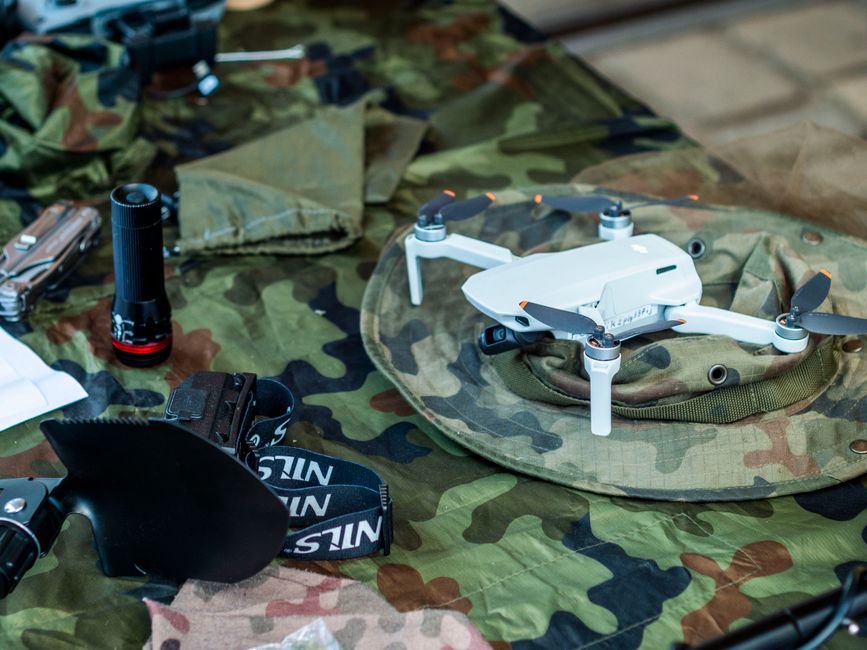
The war in Ukraine has, without question, demonstrated the battlefield utility of drones in striking detail. Low-cost unmanned systems have been used to conduct reconnaissance, strike armoured vehicles, and disrupt supply lines in ways that have reshaped conventional assumptions about warfare. For European governments eager to demonstrate responsiveness and innovation, the drone has become a convenient shorthand for modern deterrence — and a politically palatable one, given its relatively modest price tag compared with fighter jets or artillery systems.
Yet defence specialists are beginning to raise concerns that enthusiasm for drones is quietly becoming a substitute for more difficult conversations about defence spending and procurement. When a single category of weapon captures the political imagination so completely, there is a risk that policymakers begin to treat it as a comprehensive solution rather than one component of a layered and complex military posture, according to reports from within the defence policy community.
The Risk of Unbalanced Defence Priorities
The concern is not that drones lack value — they clearly do not — but that an almost ideological attachment to them could make it harder for governments to justify investment in capabilities that are less visible, less photogenic, and harder to explain to domestic audiences. Artillery stockpiles, air defence systems, logistical infrastructure, and conventional ground forces all remain essential to European security, yet they attract far less political excitement and media attention than drone programmes. If defence budgets come to be judged primarily through the lens of drone acquisition, critical gaps in other areas may go unfilled.
There is also a strategic dimension to this imbalance that extends beyond equipment choices. Analysts have noted that if Western policymakers become so invested in the narrative of cheap, high-tech solutions that they grow reluctant to defend the case for traditional — and more expensive — defence needs, the beneficiary of that confusion is likely to be Russia. Moscow, according to security observers, is well positioned to exploit incoherence in NATO and European Union defence planning.
The broader issue points to a persistent weakness in how European publics and their elected representatives engage with defence policy. Complex, multi-domain military needs do not translate easily into clear political messaging, whereas drone footage from the front line does. That asymmetry between what is strategically necessary and what is politically legible creates real risks when defence budgets are being set and priorities are being chosen.
European governments have made notable strides in boosting overall defence expenditure since Russia’s full-scale invasion of Ukraine in February 2022, with several NATO members moving closer to or beyond the alliance’s two-percent-of-GDP spending benchmark. But officials and analysts have consistently stressed that the composition of that spending is as important as its overall level. A well-funded drone programme sitting alongside depleted ammunition reserves or under-resourced training budgets does not constitute a coherent defence posture.
The lesson, defence experts argue, is not to invest less in unmanned systems but to invest more deliberately across the full spectrum of military capability — and to resist the temptation to let any single technology, however impressive, become a substitute for the harder work of comprehensive strategic planning.