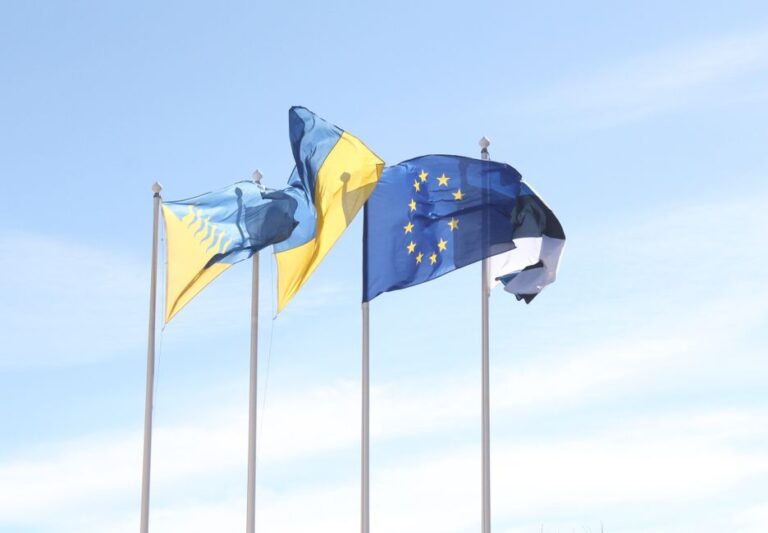
Ukraine Recovery Conference Gdansk 2026: What to Expect
The Ukraine Recovery Conference (URC 2026) convenes in Gdansk, Poland, on 25 and 26 June, bringing together heads of government, international financial institutions, and private sector leaders to advance what the World Bank and United Nations jointly estimate as a ten-year, $520 billion reconstruction effort. Polish Prime Minister Donald Tusk and Ukrainian Prime Minister Denys Shmyhal will co-host the event, with the European Council’s conclusions this week explicitly endorsing the conference and calling for sustained international support.
The choice of Gdansk is deliberate and carries considerable political weight. The city is the birthplace of Poland’s Solidarity movement, and Warsaw has been Ukraine’s most consistent bilateral supporter throughout the war. Hosting the conference in Gdansk sends a clear signal that Poland’s European Union Council Presidency — which runs until 30 June 2026 — regards Ukrainian reconstruction as a defining legacy commitment.
The funding architecture surrounding the conference is substantial, though the gap between pledges and assessed need remains enormous. The EU announced this week a €90 billion loan for 2026 and 2027, with the first disbursement expected before the end of June. Separately, the EU’s Ukraine Facility — a €50 billion instrument running from 2024 to 2027 — has disbursed roughly €18 billion to date and remains broadly on track. The G7’s Extraordinary Revenue Acceleration loan of $50 billion, backed by frozen Russian sovereign assets, was disbursed in full during 2024. The World Bank’s Ukraine trust fund holds $5.4 billion pledged by more than 40 donor countries. Against all of this, the $520 billion reconstruction estimate — itself due to be updated at Gdansk — underlines how far the international community still has to travel.
The conference will focus on five critical areas. Ukraine’s energy infrastructure has been systematically targeted throughout the conflict, with an estimated 70 per cent of generation capacity damaged; delegates will examine modular reactors, distributed solar installations, and winter resilience programmes. Housing reconstruction represents an equally urgent challenge, with 2.4 million units damaged or destroyed and pre-fabricated construction technologies expected to feature prominently. Agricultural land de-mining — covering more than two million hectares — is advancing under technical programmes led by the EU and the United Kingdom. Digital reconstruction will also be addressed, with Ukraine’s Diia government platform presented as a model for integrating digital infrastructure into physical rebuilding. Finally, a private sector mobilisation initiative, the Ukraine Business Compact, has secured pledges from more than 400 companies and will be a centrepiece of the second day’s sessions.
The European Commission will play a prominent institutional role. Commissioner for Enlargement Marta Kos will co-chair working sessions, and the Commission will present an updated status report on Ukraine’s Reform and Investment Programme, linking reconstruction funding directly to the country’s EU accession trajectory.
One legally significant financial mechanism will also receive attention. Interest accruing from approximately €300 billion in frozen Russian sovereign assets — held primarily at Euroclear in Belgium — is generating between €3 billion and €4 billion annually, channelled into Ukraine’s reconstruction fund. The legal basis for this arrangement has been secured under EU law, though a challenge before the European Court of Human Rights remains pending. The outcome of that case will have long-term implications for how the international community treats sovereign assets seized in response to aggression.
URC 2026 arrives at a moment when donor fatigue is a genuine political risk in several contributing countries. The Gdansk conference must therefore do more than catalogue existing commitments — it must generate new ones and demonstrate that the reconstruction framework is translating pledges into tangible outcomes on the ground.