Trump Threatens Big Tariff on UK Over Digital Services Tax
President Donald Trump has threatened to impose a “big tariff” on the United Kingdom unless it scraps its 2% digital services tax on US technology companies — the latest deterioration of a transatlantic relationship that has visibly fractured since the Iran war began on 28 February 2026. “They think they’re going to make an easy buck. That’s where they’ve taken advantage of our country,” Trump said. “We’ve been looking at it, and we can meet that very easily by just putting a big tariff on the UK.”
The UK digital services tax: a £700 million irritant
The UK’s digital services tax, introduced in 2020, imposes a 2% levy on the UK revenues of major US tech firms — primarily Google, Meta, Amazon and Apple. It generates roughly £700 million a year for HM Treasury. The Treasury has consistently resisted abolishing the tax without a multilateral OECD replacement, and that position has held through the 2024 election cycle, the 2025 Trump return to office, and the September 2025 Chequers visit.
The Chequers technology deal — under threat
Trump’s threat carries unusual weight because of what it would unwind. On 18 September 2025, the President met Sir Keir Starmer at Chequers, where the pair signed what was described at the time as a “groundbreaking” billion-dollar technology prosperity deal. That agreement covered AI infrastructure, semiconductors, biotech research and joint defense-technology programmes. Trump now openly questions even the underlying 2025 trade-deal foundations: “It’s been better, but it’s sad. And we gave them a good trade deal, better than I had to, which can always be changed.”
France, Italy, Spain: equivalent taxes in the crosshairs
The UK is not alone in operating a digital services tax. France has its ‘GAFA tax’ at 3% on French revenues, generating approximately €800 million annually. Italy has a 3% web tax. Spain has a 3% digital services levy. Other EU member states with similar taxes include Austria, Hungary and Poland. If Trump succeeds in forcing UK abolition through tariff threats, the precedent would directly threaten the legal basis on which all these member-state taxes operate. The European Commission’s pillar-one OECD-replacement effort has stalled.
The North Sea and immigration broadside
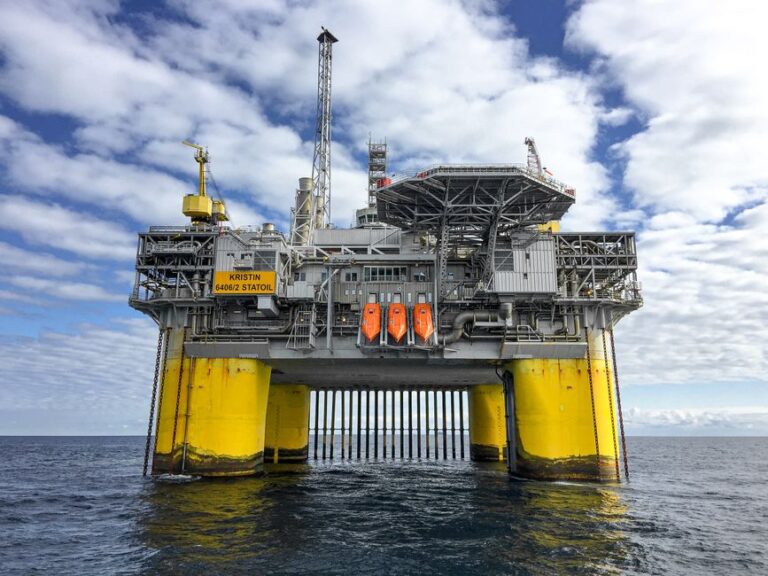
Trump’s grievance list extends beyond digital taxes. In a Sky News interview, he said: “I think I like Starmer, but I think that he’s made a tragic mistake in closing the North Sea oil. You see your energy prices are the highest in the world and I think he’s made a tragic mistake on immigration.” He added: “I love your country and I would love to see it succeed, but if you have bad immigration policies and bad energy policies you have the worst of both. You can’t succeed, it’s not possible.”
The EU calculation
For Brussels and EU member states, the UK is functioning as the test case for Trump’s digital-tax pressure campaign. The European Commission is likely to issue a unified response if Trump moves to formal tariffs against the UK — but the timing is awkward. The EU is simultaneously negotiating its own trade-deal renewal with the US (Trump has set a 4 July 2026 deadline for the EU to approve last year’s trade deal terms or face higher tariffs), and is processing the EU-Mercosur agreement that became provisional on 1 May. The next major institutional set-piece is the G7 finance ministers’ meeting in mid-June.