
EU Confirms First €6 Billion for Ukraine in Q2 2026, Dedicated to Ukrainian-Made Drones
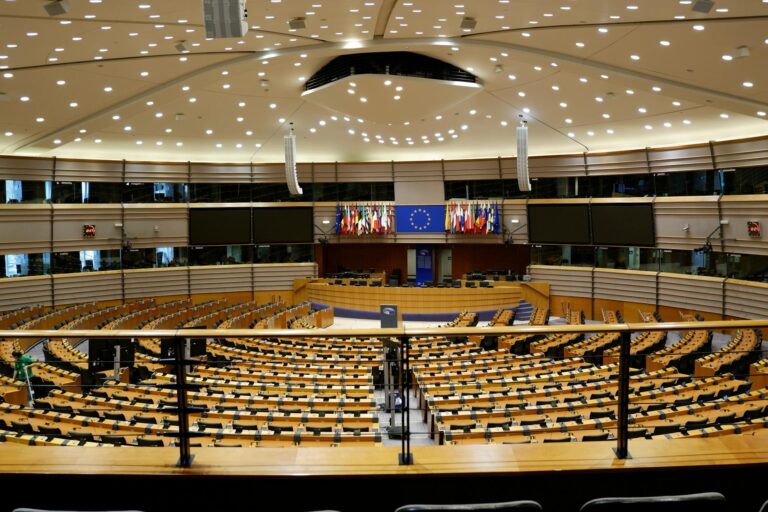
European Commission President Ursula von der Leyen announced on 29 April 2026, during a plenary session of the European Parliament in Strasbourg, that the first €6 billion tranche of the EU’s €90 billion support loan to Ukraine will be disbursed in the second quarter of 2026 and dedicated specifically to Ukrainian-made drones. The announcement marks a structural shift in EU support: from financing reconstruction and budget needs to directly funding Ukraine’s domestic defence-industrial base.
The structure of the €90 billion loan
The €90 billion loan, agreed by EU leaders to cover Ukraine’s financing needs for 2026 and 2027, will be split: one third for budgetary needs (salaries, pensions, basic services) and two thirds for defence. Of the total, €45 billion is allocated for 2026, with the first €6 billion tranche to be transferred to Kyiv no later than June. Von der Leyen stated bluntly: “The first package will be dedicated to drones. Drones from Ukraine for Ukraine.”
Why drones, why now
The decision reflects a hard-learned lesson of the four-year war: Ukraine’s domestic drone industry has become a decisive battlefield asset and a model of fast-cycle defence innovation. Ukrainian-designed FPV drones, naval drones and long-range strike platforms have repeatedly outpaced Russian countermeasures. Funding domestic production rather than imports has the additional advantage of strengthening Ukraine’s industrial base for the post-war period and avoiding bottlenecks in EU defence supply chains that are already strained by national rearmament programmes.
From SAFE to direct loan
The €6 billion tranche complements the EU’s flagship SAFE programme (Security Action for Europe), the €150 billion defence instrument adopted in 2025. Most of the 19 member states that joined SAFE have already included joint projects with Ukraine in their defence plans. The new direct loan provides a more flexible mechanism for fast disbursement, bypassing the slower co-financing logic of SAFE.
Conditional repayment
A politically critical feature of the €90 billion loan is its contingent repayment clause: Ukraine only has to pay it back if Russia pays war reparations. In practice, this transforms the loan into a quasi-grant backed by the immobilised Russian sovereign assets held in EU jurisdictions. The European Council’s December 2025 decision to permanently immobilise those assets — and to reserve the right to use them — gives the financial architecture political weight without crossing the legal red line of outright confiscation.
What comes next
Subsequent tranches in 2026 are expected to fund a broader range of military capabilities: air defence, artillery ammunition, electronic warfare and the Ukrainian-led Coalition of the Willing security architecture currently being designed in Paris. The Commission has also signalled that tightened conditions may apply to later disbursements, linked to Ukrainian governance reforms required by the accession process. The next major decision point is the EU summit in late June.