REPowerEU in Action: Russian LNG Short-Term Contracts Banned from 25 April 2026, Pipeline from 17 June
The first hard prohibitions of the REPowerEU gas regulation — the legal instrument turning the EU’s commitment to end Russian fossil-fuel imports into binding law — took effect on 25 April 2026. From that date, imports of Russian liquefied natural gas (LNG) under short-term contracts concluded before 17 June 2025 are prohibited. Pipeline gas under short-term contracts follows on 17 June 2026, and a full LNG ban applies from 31 December 2026. Pipeline gas under long-term contracts must end by 30 September 2027 — extended at the latest to 1 November 2027 if storage targets require it.
The legal architecture
The regulation — EU/2026/261 — was published in the Official Journal on 2 February 2026 and entered into force on 3 February. It is, in EU institutional terms, a sharp instrument: directly applicable in all member states, with harmonised penalties for non-compliance, and built around a prior-authorisation regime for natural-gas imports. Authorising or customs authorities now check, document by document, whether each cargo originates from a Russian source. Member states submitted national diversification plans by 1 March 2026; the Commission is now assessing them and will publish recommendations.
From 45% to 13% — and counting
The political backdrop is the four-year transformation of the EU energy system since Russia’s full-scale invasion of Ukraine. EU dependency on Russian gas has fallen from 45% of total imports before the war to about 12% in 2025. Russian coal is fully banned. Russian oil imports have shrunk from 27% at the start of 2022 to roughly 2% — only two EU countries still take in Russian crude. The remaining roughly 35 billion cubic metres of Russian gas annually — worth around €10 billion — will be progressively eliminated through 2026 and 2027.
The 20th sanctions package
The Council adopted its 20th package of sanctions on 23 April 2026, complementing the gas regulation with targeted measures: prohibition on European companies selling tankers used in Russian shadow fleet operations, restrictions on maintenance services for Russian LNG tankers and ice-breakers, a ban on providing Russian LNG terminal services from 2027, and a quota on ammonia imports. The package also tightens financial-system measures and adds further individuals to the sanctions list.
Hungary, Slovakia and TurkStream
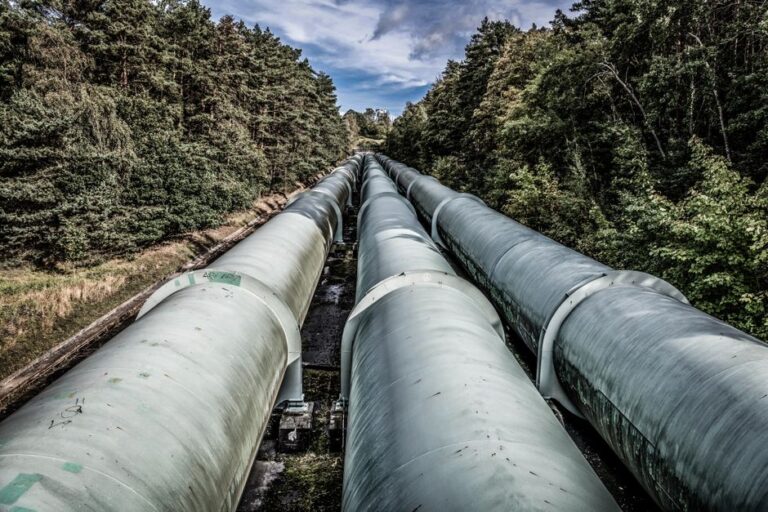
Two member states — Hungary and Slovakia — still import meaningful volumes of Russian gas via the TurkStream pipeline. Both submitted diversification plans by the March deadline; both have publicly resisted what they regard as economically punishing rules. The regulation accommodates limited transitional flexibility for landlocked countries and for member states facing demonstrated security-of-supply risks, but the binding end-dates apply to all.
Oil legislation delayed
A planned Commission proposal for a permanent legal ban on Russian oil imports was removed from the agenda on 15 April after the closure of the Strait of Hormuz triggered global oil-supply tightening. Separate legislation is expected to be tabled by the end of 2027 to formally end remaining Russian oil flows. In the meantime, sanctions and the diversification plans submitted under the gas regulation continue to constrain Russian oil revenues.