Gaza War Exposes Deep Cracks in European Democracy and Values
Three years of war in Gaza have profoundly altered European politics, exposing growing divisions over how the continent responds to the conflict and how it treats its own Muslim citizens. The war, which began as retaliation for Hamas attacks on 7 October 2023, has killed more than 74,000 Palestinians and reduced most of the territory to rubble. It has also shifted global perceptions of Israel, increased support for Palestine, and raised questions about the limits of American power. In Europe, the response has been marked by a striking double standard: while the EU moved swiftly to sanction Russia over its invasion of Ukraine, it has imposed no collective sanctions on Israel, no trade restrictions, and no end to arms sales.
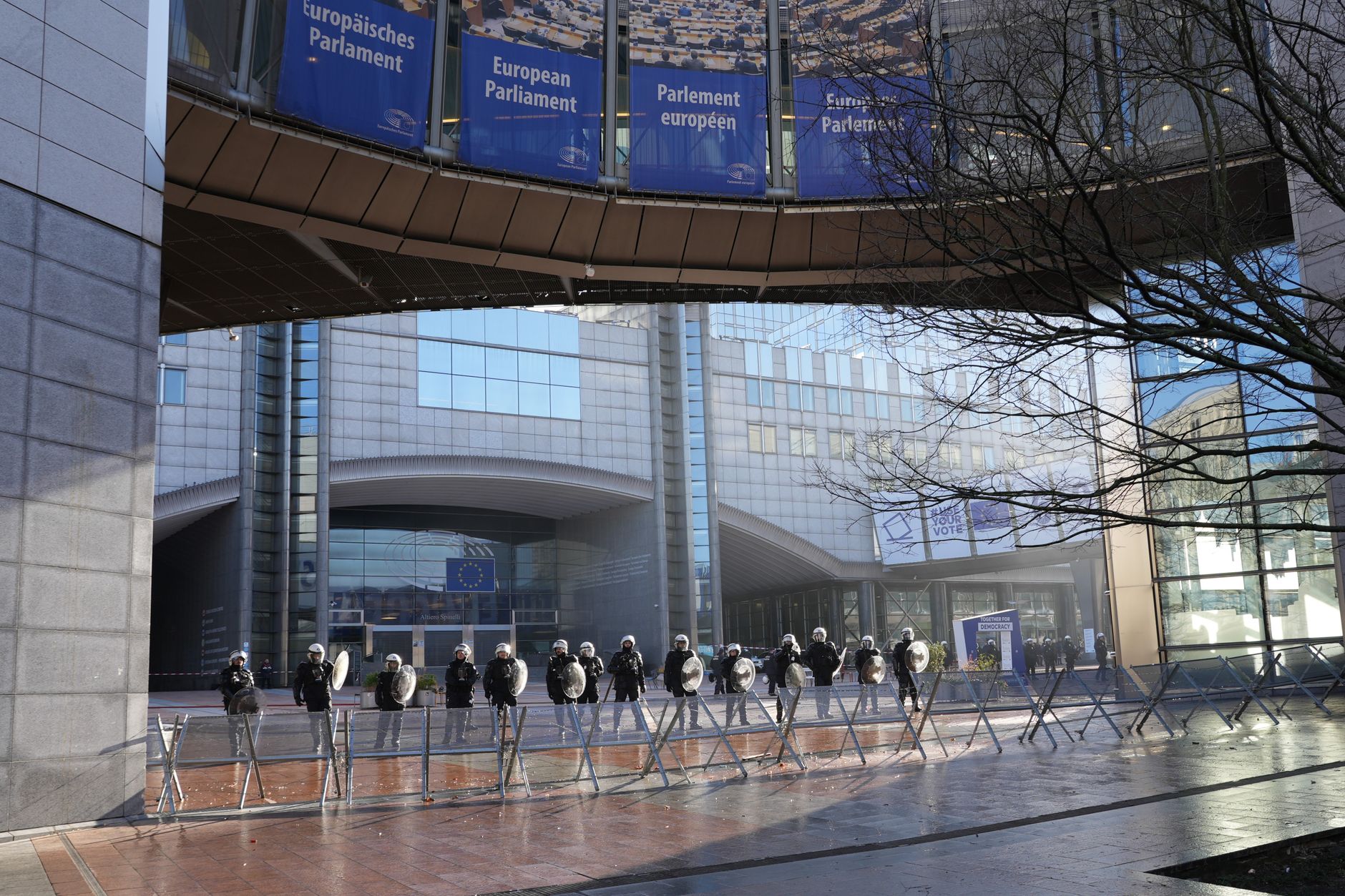
European policymakers, critics say, are selective about whose suffering they recognise and whose resistance they deem legitimate. The question of Palestine has become a stress test for European democracy, exposing fault lines that grow wider by the week. At home, governments across the continent have imposed restrictions on free expression and peaceful protest. Police violence at pro-Palestinian demonstrations has become the norm, and those who speak publicly for Palestinian rights are increasingly criminalised or treated with suspicion. Rabin Baldewsingh, the Netherlands’ national coordinator against discrimination and racism, has warned that “governments and public institutions have a responsibility not to reinforce polarisation when society is deeply divided.”
Antisemitism and Islamophobia: A Divergent Response
The EU Fundamental Rights Agency has long warned of both anti-Muslim racism and antisemitism. But over the past three years, antisemitism linked to Gaza has been treated as a threat to democracy, while Islamophobia has been viewed primarily through a security and anti-terrorism lens. Some extremist groups claim that Muslims and refugees have “imported” antisemitism into Europe, a narrative that has gained traction in mainstream politics. The European People’s Party (EPP), the EU’s largest political family, which includes Ursula von der Leyen and Magnus Brunner, the EU’s most senior official for migration, has embraced this framing.
In June, the EPP backed a resolution condemning the “interference of political Islam” in European democratic processes. No evidence for such interference was advanced in the document. The resolution echoes French conspiracy theories about “Islamist entryism” and calls for a crackdown on alleged Muslim Brotherhood networks. It claims a distinction between “political Islam” and the Islamic faith, but critics say it reads like the start of a witch-hunt against European Muslims. A tougher EPP resolution passed by a majority in the European Parliament on 8 October casts suspicion on the loyalty, activity, and participation of Muslim civil society groups in European democracy.
Muslim Civil Society Under Pressure
Hiba Latreche, president of Femyso, a pan-European network of young Muslim organisations explicitly mentioned in the EPP attack, describes an impossible bind: “When we are not active we are accused of communitarianism, separatism and lack of integration. When we engage and exercise active citizenship we are accused of having a hidden agenda.” The European Network Against Racism (ENAR), Europe’s most powerful pro-equality body, has lost its European Commission funding and may cease operations by the end of the year. ENAR has launched a legal challenge at the EU’s general court. EU officials acknowledge that Islamophobia is “quite blatant,” with micro-aggressions and remarks about Muslims’ supposedly “irrational and emotional” behaviour.
In her recent “state of the union” speech, von der Leyen referred to Gaza as a humanitarian emergency, not a human-made genocide. There is agreement on the need for action against settler violence and illegal settlement in the West Bank, but it is framed as the work of “extremists.” Confronting the Israeli government directly remains difficult for European leaders, even as pro-Palestinian movements have expanded to include trade unions, faith groups, Jewish activists, students, celebrities, and senior politicians.
Internal Dissent and the Future
Within the EU institutions themselves, dissent is growing. Every Thursday, members of EU Staff for Peace gather for a vigil outside the European Commission and the EU Council. Former EU commissioners, ambassadors, and senior staff continue to write to their bosses urging stronger action against Israel. The war in Gaza has not only devastated a distant territory; it has laid bare the contradictions at the heart of European policy and the erosion of democratic norms within Europe itself.