Erdoğan at the Crossroads: Turkey’s Enduring Strongman Navigates a Shifting World Order
Few political figures in the contemporary era have proven as durable, adaptable, or consequential as Recep Tayyip Erdoğan. Now more than two decades into his grip on Turkish political life, the president continues to shape not only his own country’s trajectory but also the broader balance of power across Europe, the Middle East, and beyond — making him one of the most closely watched leaders on the international stage.
Erdoğan first rose to prominence as mayor of Istanbul in the 1990s before ascending to the prime ministership in 2003. What followed was a remarkable consolidation of influence, culminating in a transition to an executive presidency following a 2017 constitutional referendum that critics argued was designed primarily to entrench his personal authority. His ability to survive political turbulence — including a coup attempt in 2016, chronic inflation, and mounting opposition — speaks to a political instinct that few of his contemporaries can match.
A Leader Who Defies Easy Classification
Analysts and observers have long struggled to place Erdoğan within a single ideological framework. He has positioned Turkey simultaneously as a NATO ally and as a country willing to purchase Russian defence systems, drawing repeated rebukes from Western partners. He has cultivated ties with Gulf states, brokered grain deals between warring nations, and positioned Ankara as an indispensable mediator in conflicts where larger powers have stumbled. According to reports, this deliberate strategic ambiguity is not accidental — it is central to how Erdoğan understands Turkish power.
Domestically, his record is similarly complex. Supporters credit him with overseeing a period of significant economic growth in his early years in office, expanding infrastructure, and elevating Turkey’s international profile. Critics point to the erosion of judicial independence, the imprisonment of journalists, and the suppression of Kurdish political movements as evidence of an increasingly authoritarian state. Human rights organisations have consistently raised concerns about the rule of law under his administration.
Turkey’s economy has provided some of the most acute tests of Erdoğan’s leadership. An unconventional approach to monetary policy — in which he resisted raising interest rates even as inflation spiralled — triggered a currency crisis that left ordinary Turks facing sharply diminished purchasing power. Eventually, more orthodox economic management was reinstated, though the scars of that period remain, according to analysts tracking the Turkish economy.
On the European front, Turkey’s long-stalled candidacy for EU membership remains nominally active but effectively frozen. Relations with Brussels have deteriorated considerably over concerns about democratic backsliding, though trade and migration cooperation continue to bind the two sides in a relationship that is, by most assessments, too important for either party to abandon entirely.
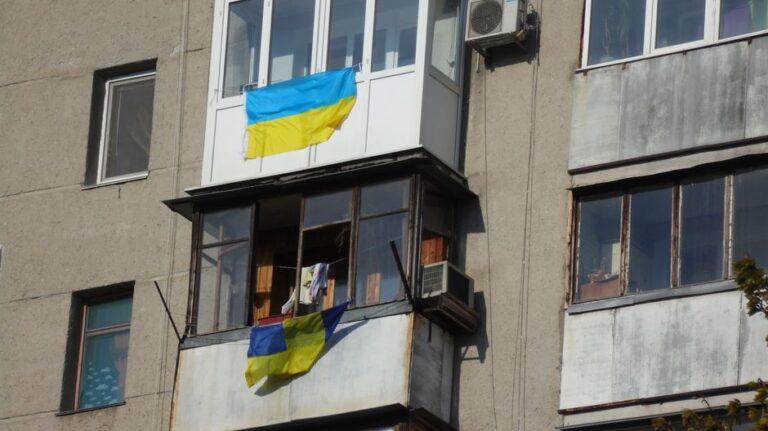
As geopolitical uncertainty deepens — with the war in Ukraine persisting, tensions in the eastern Mediterranean unresolved, and questions about the future of Western alliances multiplying — Erdoğan’s Turkey occupies a pivotal position. Whether that position is ultimately wielded as a bridge or a barrier may be the defining question of his remaining time in office. For European policymakers, understanding what drives him is not merely an academic exercise. It is a strategic necessity.