Ancient Roman Bridge Surfaces in Rome as Tiber Falls to Historic Low
An extraordinary consequence of Italy’s ongoing drought has emerged in the heart of Rome, where receding waters in the Tiber River have revealed the long-submerged stone pillars of an ancient Roman bridge believed to date back to the reign of Emperor Nero in the early centuries of the Common Era.
The Tiber, which winds through the Italian capital and past some of its most iconic landmarks, has dropped to what observers are describing as a historic low. The fall in water levels has been dramatic enough to expose structural remains that ordinarily rest beneath the river’s surface, invisible to residents and tourists alike who pass daily along its banks.
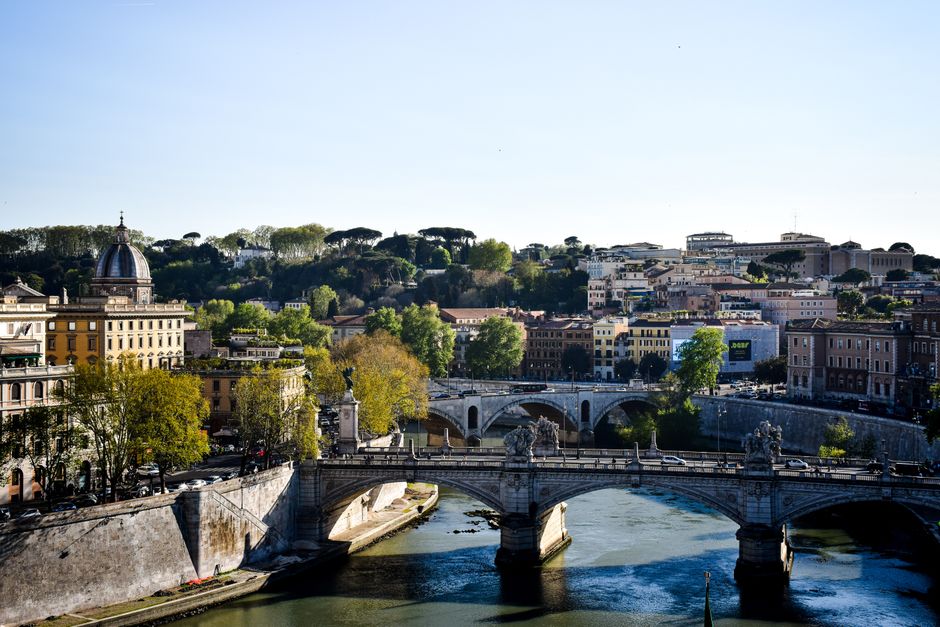
The re-emerged ruins have appeared near Castel Sant’Angelo, the imposing cylindrical monument on the river’s right bank that itself dates to the second century AD. According to reports, the pillars visible above the waterline are the remnants of what was once known as the Neronian Bridge, a crossing that would have been a significant piece of Roman urban infrastructure during the imperial period.
A Window Into Rome’s Imperial Past
The emergence of such ancient masonry from a modern urban waterway serves as a striking reminder of the depth of history lying beneath and alongside Rome’s contemporary landscape. The Tiber was central to ancient Roman life — a commercial artery, a boundary marker, and a ritual space — and the bridges that once spanned it were feats of engineering as well as symbols of imperial ambition. While Rome still possesses several bridges with ancient origins, many others were lost to centuries of floods, wars, and urban transformation, making any reappearance of their remains a notable event for archaeologists and historians.
The current drought conditions affecting the Tiber reflect a broader pattern of water stress that has been recorded across much of southern Europe in recent years. Italy in particular has experienced increasingly severe dry spells, with rivers, lakes, and reservoirs registering below-average levels during summer months. The Po Valley in the north, Lake Garda, and now the Tiber in Rome have all attracted attention as visible indicators of shifting climatic conditions on the continent.
While the exposed ruins have drawn interest from the public and media, officials and heritage bodies have not yet announced any formal archaeological assessment or excavation plans in connection with this latest appearance, according to available reports. The site around Castel Sant’Angelo is already one of the most archaeologically sensitive areas of the city, and any intervention would require careful coordination between conservation authorities.
For now, the ancient pillars stand as an unplanned exhibit — a consequence not of scholarly planning but of the river simply running dry. Whether water levels will recover sufficiently to re-submerge the structure in the coming weeks remains to be seen, as Italy continues to monitor rainfall deficits across the country. In the meantime, Romans and visitors are being afforded a rare and fleeting glimpse of the city’s layered past, surfacing quite literally from the riverbed beneath their feet.