The Many Faces of Saint Francis: From Radical Pacifist to Fascist Symbol
Francis of Assisi, born Giovanni di Pietro di Bernardone in 1181 or 1182, remains one of history’s most multifaceted religious figures. Eight centuries after his death on October 3, 1226, his legacy continues to inspire everything from ecological activism to pet blessings, yet it has also been twisted for political ends. A new book by cultural historian Amanda Minervini examines how Mussolini’s fascist regime appropriated the saint’s image, while theologian Daniel P. Horan reflects on why Francis still resonates today.
A Radical Life of Poverty and Peace
The son of a wealthy cloth merchant, Francis enjoyed a privileged youth, described by early hagiographers as lively and sociable, with a love of singing and parties. He dreamed of knighthood, but after being captured in a 1202 battle against Perugia and spending a year in prison, he returned home shaken. At the ruined Church of San Damiano, he believed Jesus Christ called him to “rebuild my church.” He began repairing chapels, selling cloth from his father’s shop to fund the work. In a dramatic public act, he stripped off his fine clothes before the bishop and townspeople, renouncing his father and inheritance to embrace poverty, humility, and care for the sick. He founded the Order of Friars Minor and is widely considered the first saint to receive the stigmata.
Francis’s commitment to peace was tested in 1219 during the Fifth Crusade, when he crossed enemy lines to meet Sultan Malik al-Kamil in Damietta, Egypt. Though he failed to convert the sultan or end the conflict, his audacity left a lasting mark. Horan notes that Francis’s story of “lifelong conversion and the desire to be in a positive relationship with others, God and the rest of creation speaks to people across time and cultures.”
Fascist Appropriation and Its Legacy
Minervini’s research reveals how Mussolini’s regime manipulated Francis’s image. The fascists reframed his stigmata as symbols of heroic sacrifice, invoking the wounds “to glorify sacrifice and inspire Italian youth to go to war,” she writes. In 1927, Mussolini was rebaptized to strengthen ties with the Vatican, and Francis offered “a particularly useful means of conferring religious legitimacy upon political power.” A confidential 1929 note to military chaplains expressed concern that they might preach peace to troops, evidence that fascist groups sought to suppress Francis’s pacifism. After Italy joined the Allies, the politically compromised image was quietly set aside, and many fascists remained in place.
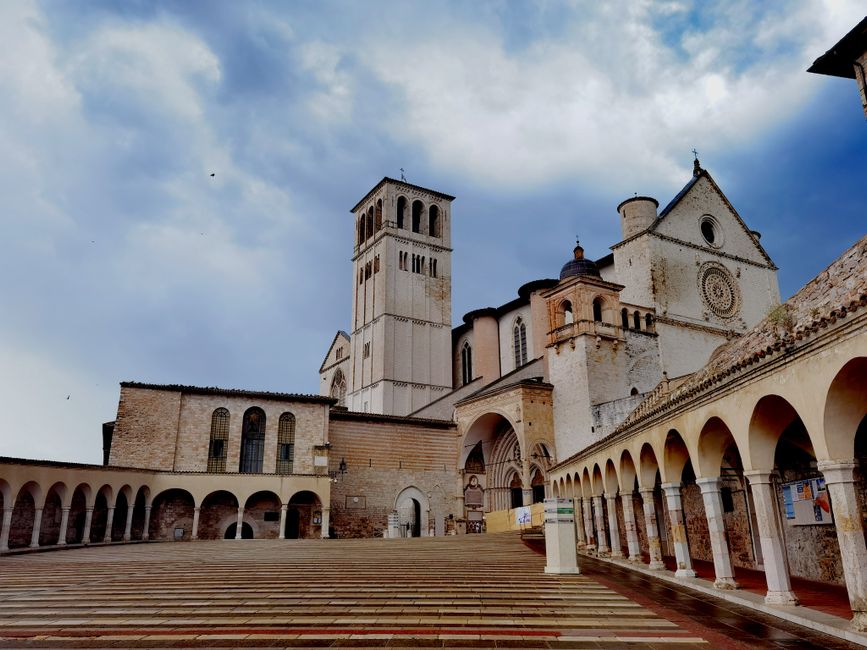
Today, Francis’s appeal is as broad as ever. Minervini observes: “In Francis, there seems to be something for everyone: the pacifist, the ascetic, the mason, the environmentalist, the minimalist, the lover of animals also loved by animals, the diplomat, the mystic, the radical, the performer, and even the model of a different kind of masculinity.” His tomb in Assisi’s grand basilica, adorned with frescoes by renowned medieval artists, drew hundreds of thousands of visitors earlier this year for the 800th anniversary of his death.