EU’s 21st Sanctions Package Targets Russia’s Shadow Fleet
The European Council’s June summit formally endorsed the European Union’s 21st sanctions package against Russia, adopted by the Council on 15 June 2026, marking the most comprehensive maritime enforcement action since the war began. Summit conclusions singled out the shadow fleet as a priority target and, notably, introduced the phrase “whole of route” approach — language that signals a deliberate shift from reactive listing to systematic dismantlement of the entire logistics chain sustaining Russian oil exports.
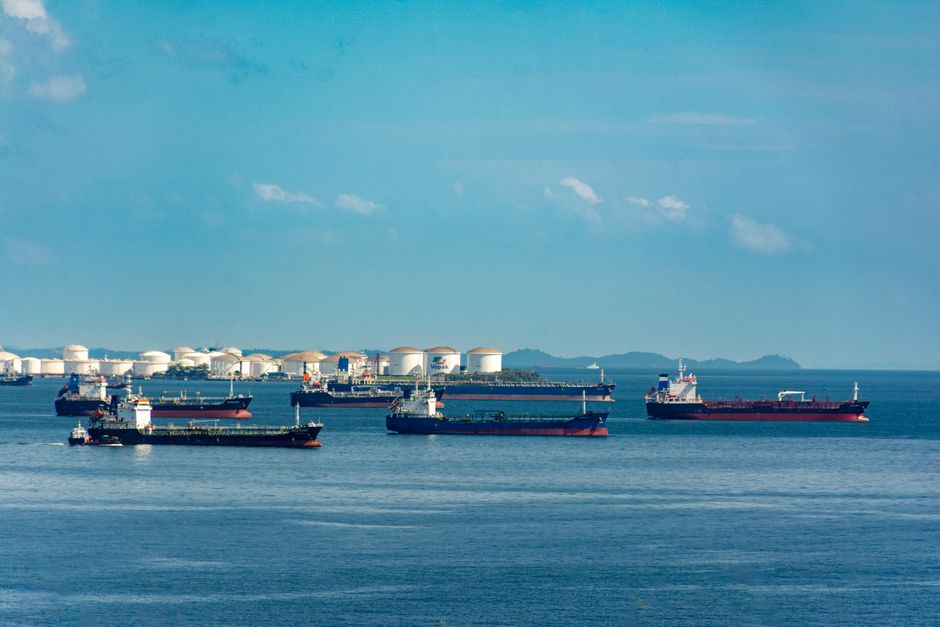
The package adds 189 vessels to the EU’s shadow fleet sanctions register, pushing the cumulative total beyond 800 listed tankers. Sanctioned ships are denied access to EU ports and shipping services, while EU insurers and reinsurers are now barred from providing coverage to listed vessels anywhere in the world — a jurisdiction-reaching measure designed to strip these ships of legitimate financial infrastructure regardless of where they operate.
Enforcement capacity receives a direct technological upgrade under the new measures. Copernicus satellite data will be shared in real time with member state coast guards, specifically to detect and respond to AIS signal manipulation — the standard evasion tactic employed by shadow fleet operators to mask vessel movements and port calls. The provision transforms passive monitoring into an active enforcement instrument available to national authorities across the bloc.
The package also tightens the net around intermediaries. Companies in third countries that facilitate Russian oil trade now face secondary sanctions risk, a tool the EU has deployed cautiously until now. Separate provisions expand designations targeting Russian propaganda infrastructure, including RT and Sputnik affiliates operating through third-country entities — an acknowledgement that information warfare is treated as an integral component of the sanctions architecture.
Coordination with G7 partners, reached at the Evian summit running concurrently on 15–17 June, substantially extends the enforcement perimeter. The United States, United Kingdom, Canada, Japan, and South Korea — the last two representing major shipping registry jurisdictions — have agreed to aligned shadow fleet enforcement. European Council conclusions explicitly reference this coordination, reflecting Brussels’ assessment that unilateral EU pressure alone is insufficient to close circumvention routes through Asian registries.
The economic pressure on Moscow is measurable. Russian oil export revenues fell 18 per cent in the first quarter of 2026 compared with the same period in 2025, a decline attributable in part to previous sanctions rounds. The 21st package is projected to tighten that squeeze further, though Turkish, Emirati, and Indian transit routes remain partially operational, providing Russia with residual capacity to sustain revenues below pre-war levels but above collapse thresholds.
On cultural and sporting normalisation, the European Council conclusions are unambiguous. Russian athletes and cultural figures will not be permitted to return to international events while the war continues. The conclusions constitute an explicit rejection of arguments — advanced with increasing frequency in some European capitals — that gradual reintegration of Russian civil society figures into international platforms could serve a constructive purpose.
The incoming Irish Presidency, which assumes the rotating Council chair on 1 July, has indicated it will drive a 22nd sanctions package for adoption by the October European Council. The European Commission is simultaneously preparing proposals on critical minerals sanctions, targeting Russian circumvention via Central Asian supply chains — a route that has grown in strategic importance as direct trade channels face tighter scrutiny. Whether that timetable holds will depend on the pace of G7 coordination and the robustness of enforcement by member states whose maritime and customs authorities bear the practical burden of implementation.