EU Leaders Open Brussels Summit With Competitiveness and Ukraine Top of Agenda
European Union leaders gathered in Brussels this morning for the first day of the June European Council summit, facing one of the most consequential agendas in recent memory. President António Costa chairs proceedings that span competitiveness reform, the Ukraine war, enlargement milestones, and the opening salvos of what promises to be a bruising multi-annual financial framework negotiation.
The summit opened with a substantive review of the ‘One Europe, One Market’ roadmap, the trilateral agreement signed by the three EU institutions on 24 April 2026. Leaders examined progress across its five pillars — regulatory simplification, single market deepening, capital markets union, energy union, and the digital single market — alongside Cyprus Presidency President Nikos Christodoulides. The roadmap exists squarely in the shadow of Mario Draghi’s landmark report, which identified an €800 billion annual investment gap threatening European competitiveness. Leaders must now provide the Commission with concrete political guidance on closing that gap, a task requiring difficult choices on public financing, private capital mobilisation, and regulatory burden reduction.
Volodymyr Zelenskyy addressed EU heads of state and government directly, a gesture that carries increasing symbolic and strategic weight as Ukraine demonstrates continued battlefield resilience. Russian forces are failing to achieve their stated strategic objectives, yet the threat has migrated in form. Russian drone incursions into EU airspace — most sharply illustrated by the crash of an explosive-carrying Russian drone in Romania — have lent new urgency to the debate around Article 42(7) operationalisation and eastern flank security architecture. The two-pronged EU approach of sustaining Ukraine militarily while maximising economic pressure on Moscow received confirmation as the correct course. A new sanctions package adopted on 15 June targets Russian energy revenues, the military-industrial complex, and state propaganda infrastructure.
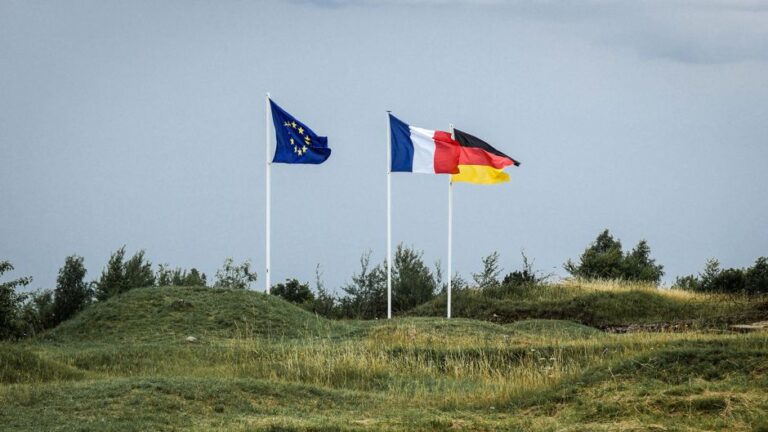
On enlargement, leaders formally welcomed a significant procedural milestone: the opening of the first accession cluster — Fundamentals — with Ukraine and Moldova on 12 June, the first such opening in three years. A Franco-German non-paper circulated on 4 June proposes gradual integration mechanisms to accelerate the process without waiting for full membership, including observer status in selected Council configurations and earlier access to single market provisions. For the Western Balkans, the Tivat summit of 5 June injected fresh momentum into a process long criticised for stagnation, with Montenegro now positioned as the candidate closest to accession.
The MFF 2028-2034 discussions represent the summit’s most politically combustible element. The Cyprus Presidency tabled its negotiating box on 11 June, proposing a framework of €1.73 trillion — representing a two percent cut against the Commission’s original proposal. This marks the first time heads of state and government have engaged with actual figures, moving the conversation from generalities into the harder terrain of national contributions and spending priorities. Costa stated plainly that leaders carry “collective responsibility to reach agreement by end of year,” with the operative deadline being a budget operational from 1 January 2028.
Defence readiness featured prominently amid the broader security context. Leaders reviewed the EU defence readiness agenda, with the €1.5 billion EDIP deal concluded on 10 June and the ReArm Europe instrument now embedded in legislative reality. Recurring drone incursions have accelerated demands for a more robust collective defence posture.
On the Middle East, EU leaders presented a coordinated post-G7 Evian position on the US-Iran 60-day ceasefire extension and the reopening of the Strait of Hormuz, seeking to project European strategic coherence in a rapidly shifting diplomatic landscape.
Hungary’s Viktor Orbán attends, and few expect him to remain passive. His leverage over MFF unanimity requirements and his continued obstruction of the Ukraine loan mechanism are expected to dominate corridor diplomacy throughout the day, even as the formal rule of law update discussed at the General Affairs Council on 16 June hangs over proceedings.