Oil Markets Heading for ‘Red Zone’ This Summer, IEA’s Fatih Birol Warns Over Iran Crisis
The International Energy Agency warned Thursday that global oil markets risk entering a “red zone” this summer with potential supply shortages in July or August if the Iran crisis remains unresolved, with the European economy particularly vulnerable to price shocks and inflation pressures that are already straining the eurozone’s growth trajectory.
The IEA’s ‘Red Zone’ Warning
Fatih Birol, Executive Director of the Paris-based International Energy Agency, issued the stark assessment on 21 May 2026, cautioning that crude markets could face severe supply disruptions within weeks if Middle East tensions persist without diplomatic resolution. The warning carries particular weight given the IEA’s role as the primary energy policy advisor to industrialised nations.
“The oil market could enter a ‘red zone’ with a supply shortage in ‘July or August’ if the Middle East conflict remains unresolved,” Birol stated, framing the risk window in precise temporal terms that have already begun shaping market expectations and government contingency planning across Europe.
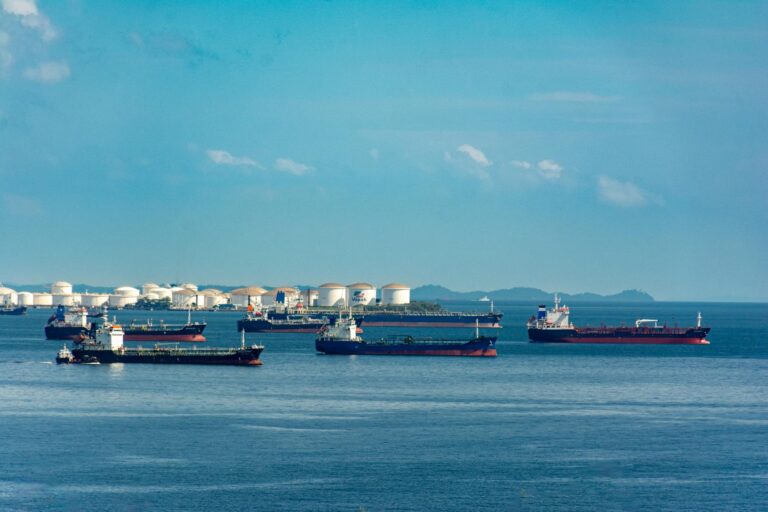
The central concern is the Strait of Hormuz, the strategic chokepoint linking the Persian Gulf to the Indian Ocean, through which approximately 20% of the world’s oil transits. Any prolonged disruption would translate immediately into crude price spikes and inflationary pressures that Europe’s fragile economic recovery can ill afford.
Supply Loss Estimates and Market Implications
The IEA’s warning aligns closely with earlier estimates from Christine Lagarde, President of the European Central Bank, who flagged the severity of potential supply losses during an April speech in Berlin. Lagarde estimated the potential supply loss at around 13 million barrels per day—nearly 13% of global consumption—figures initially dismissed by some analysts as worst-case scenarios but now substantiated by the IEA’s institutional analysis.
Brent crude prices remain near four-year highs, trading above $120 per barrel through much of the past two months, with WTI, the US benchmark, moving in tandem. Should the IEA scenario materialise, further price spikes are widely anticipated by energy market analysts, adding another layer of upward pressure on eurozone inflation already accelerating due to energy-linked costs.
OPEC+ has maintained its quota policy, but room for manoeuvre is visibly shrinking as global spare production capacity tightens. Member states with substantial capacity buffers face mounting political pressure to intervene in markets, though such decisions require careful calibration amid broader geopolitical considerations.
Eurozone Economic Headwinds
Europe faces a particularly acute vulnerability to oil market disruptions. Annual inflation in the eurozone rose to 3.0% in April 2026, up sharply from 1.9% in February, with upward pressure stemming mainly from higher energy prices directly linked to the Middle East conflict. Simultaneously, the International Monetary Fund lowered its 2026 global growth forecast to 1.1% for the eurozone, down from 1.4%, explicitly citing the gravity of the ongoing slowdown.
This combination—rising inflation coupled with falling growth expectations—constrains both monetary and fiscal policy options for European policymakers. The French government announced on 21 May a €1.2 billion support plan targeting sectors most exposed to fuel price hikes, with Prime Minister Sebastien Lecornu warning that “the war, in one way or another, will last.” Other European governments are now considering similar measures, committing additional public resources to cushion energy shocks.
US Policy Volatility and Trump’s Iran Strategy
Compounding uncertainty is the volatile stance of the Trump administration toward Iran. US President Donald Trump has oscillated dramatically between threatening military strikes and pulling back from confrontation. On Tuesday 19 May, reports indicated he had cancelled a planned US military attack on Iran, prompting brief market relief. That relief reversed sharply on Wednesday morning when the President threatened to resume strikes, illustrating the hair-trigger nature of current geopolitical risk.
This oscillating US posture has become a market-moving factor in itself, creating decision-making paralysis among European businesses dependent on stable energy costs and forcing central bankers to grapple with unprecedented tail risks in their inflation and growth forecasts.
ECB Policy at an Inflection Point
For the European Central Bank, the IEA warning reinforces the case for caution ahead of the next Governing Council decision on 5 June 2026. The ECB held the deposit rate at 2.00% on 30 April for the fifth consecutive meeting, signalling a pause in its policy normalisation cycle. Markets currently price in a +0.25 point rate hike for early June, but a renewed oil spike could accelerate that move or trigger a reversal depending on the ECB’s assessment of whether energy shocks represent temporary supply-side pressures or persistent demand-driven inflation.
Strategic Reserves and Green Transition Complications
The EU’s strategic oil reserves remain near their regulatory minimum of 90 days of net imports. Germany, France, Italy and Poland maintain the largest national reserves, but a coordinated release would only provide temporary relief if supply disruption materialises. A true crisis scenario could force difficult choices about reserve depletion versus accepting higher prices and demand destruction.
The timing is particularly sensitive for the European Commission’s green transition agenda. The Industrial Accelerator Act, scheduled for discussion at the Competitiveness Council on 28 May, aims to accelerate low-carbon industrial investment. Yet rising fossil fuel prices, while theoretically strengthening the economic case for renewables, simultaneously strain consumer purchasing power and public finances needed to fund the transition itself—a political economy tension that policymakers must now navigate.
What Happens Next
All analyst eyes are now fixed on the Strait of Hormuz. A single tanker incident could trigger market panic. The next two months—May through July—represent the critical window in which diplomatic resolution or military escalation will determine whether Europe enters summer facing a manageable energy transition or an acute supply crisis.