EU Defence Readiness Omnibus Trilogue Enters Final Stretch in Brussels
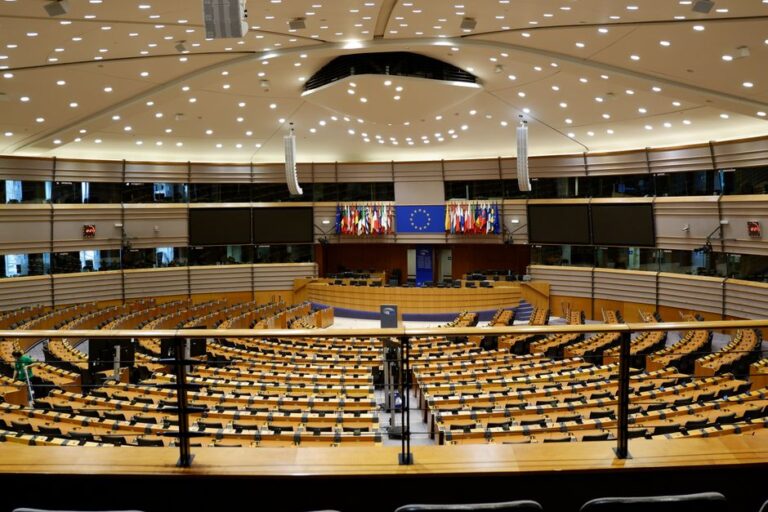
Negotiators from the European Commission, the European Parliament and the Cypriot EU Council Presidency met in Brussels on Tuesday, 19 May 2026, for what officials described as a final-stretch round of trilogue talks on the so-called Defence Readiness Omnibus. The package, proposed by the Commission a year ago, aims to cut red tape, increase transparency and accelerate domestic defence production across the bloc as part of the wider ReArm Europe plan / Readiness 2030.
A record-breaking year for European defence
The political urgency around the Omnibus reflects an industrial reality that has shifted decisively over the past two years. According to the latest report by the European Defence Agency (EDA), EU defence expenditure reached an unprecedented €343 billion in 2024 — a 19% rise on 2023, bringing spending to 1.9% of gross domestic product across the 27 Member States. For the first time, defence investment exceeded €100 billion, accounting for 31% of total expenditure, the highest share recorded by the EDA since data collection began.
The EDA’s head, High Representative Kaja Kallas, said in the September 2025 report presentation that “Europe is spending record amounts on defence to keep our people safe, and we will not stop there.” She added that the investment will be funnelled into everything from research and development to the joint procurement and production of essential defence components, and that “defence today is not a nice-to-have but fundamental for the protection of our citizens.”
What the Omnibus seeks to change
The Defence Readiness Omnibus is a set of measures aimed at streamlining the regulatory and procurement processes that the European defence industry has long described as a brake on production. The package addresses procurement rules, transparency requirements, environmental and labour compliance for defence-related projects, and the framework for joint cross-border manufacturing. The Commission’s intention is to unlock faster ramp-up of production lines for ammunition, missiles, air defence systems and other strategic capabilities.
Significant divisions remain, however, on the detail. The talks have exposed a longstanding tension between deeper European defence integration and Member States’ desire to retain sovereign control over procurement and industrial policy. Particular sticking points concern the eligibility criteria for participation in EU-funded defence projects — specifically whether and how non-EU prime contractors and components are admitted. The Parliament’s negotiators have pushed for stricter European preference rules; some Member States, notably those reliant on US suppliers, have resisted.
The ReArm Europe framework
The Omnibus is one of several legislative strands in the ReArm Europe plan, presented by Commission President Ursula von der Leyen on 4 March 2025. The plan aims to mobilise up to €800 billion of additional defence spending across the EU by 2030 through a combination of new fiscal flexibility for Member States and a dedicated joint-procurement loan instrument. The first pillar of the plan, the Security Action for Europe (SAFE) instrument, was adopted by the Council on 27 May 2025 and provides loans of up to €150 billion backed by the EU budget.
As of February 2026, the Council had activated the national escape clause of the Stability and Growth Pact for 17 Member States, giving them additional budgetary flexibility for defence spending while remaining within EU fiscal rules. The flexibility is available for four years starting from 2025, with an annual excess of up to 1.5% of the Member State’s GDP. Germany plans to spend €377 billion on new military procurement under its 2026 budget; France will double its defence budget by 2027 compared with 2017 levels; and Poland’s 2026 draft budget earmarks nearly €50 billion for defence.
The race against the calendar
Officials briefed on the talks have characterised the current trilogue round as the last realistic opportunity to conclude the Omnibus before the summer recess. A Commission spokesperson, quoted by Euronews on 19 May, said that “each day counts” as the EU races to seal the defence industry deal. The political pressure is amplified by the broader security context: the Iran war, the Strait of Hormuz tensions, the continued conflict in Ukraine, and growing uncertainty about the consistency of US security commitments to the European theatre.
For the European Defence Agency, meeting the new NATO target of 3.5% of GDP — well above the EU’s 2024 figure of 1.9% — will require spending more than €630 billion a year across the bloc. EDA Chief Executive André Denk has stressed that this scale of investment cannot be reached without significantly improved efficiency through joint procurement and interoperability, both of which the Defence Readiness Omnibus is explicitly designed to enable.
Sources: Euronews (19 May 2026); European Defence Agency Defence Data report 2024-2025; European Commission (ReArm Europe Plan / Readiness 2030, 4 March 2025); Council of the European Union (SAFE regulation, 27 May 2025); Anadolu Agency; European Parliament Think Tank.