Schengen Area Remains Resilient, Says Commission’s 2026 Report
In short: The European Commission’s annual State of Schengen report, published on Monday 18 May 2026, concludes that the borderless area continues to demonstrate operational resilience despite the cumulative pressure of irregular migration, hybrid threats at the eastern border, and the spillover effects of the Iran war. The Commission says member states are now better equipped than at any point since 2015 to manage future shocks.
The European Commission published on Monday 18 May 2026 its annual State of Schengen report, presenting the conclusions of a year-long assessment of the world’s largest area of free movement. The headline message, delivered in the Commission’s press release of the same day, is that the Schengen area “continues to be resilient and ready for future challenges.”
The 2026 report — the third produced under the formalised reporting cycle that emerged from the 2022 Schengen reform — comes against a backdrop in which the area has absorbed multiple stress tests in rapid succession: the closure of the Strait of Hormuz and the resulting energy shock; renewed irregular migration flows along the Western Balkan and Central Mediterranean routes; and a continued pattern of hybrid threats orchestrated from Belarus and Russia along the EU’s eastern flank.
The mechanism in numbers
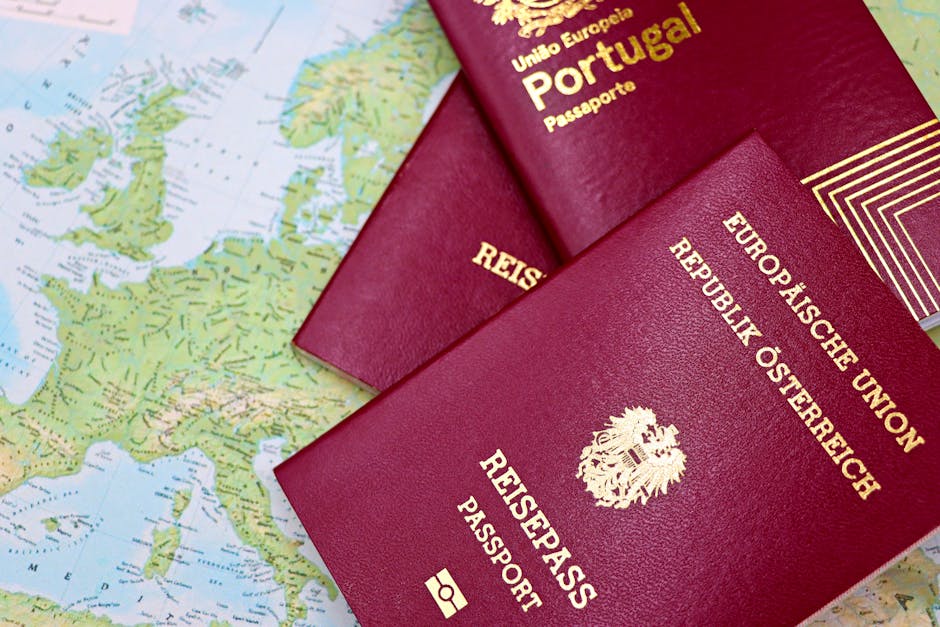
Schengen now spans 29 European countries, encompassing roughly 425 million residents and recording approximately 3.5 million border crossings each day. The internal market that depends on it generated cross-border movement of goods worth more than €4 trillion in 2025, according to the Commission’s own data. Any meaningful disruption to the free movement framework carries economic costs that, by the Commission’s previous estimates, could reach €100 billion annually under sustained internal border control.
The report acknowledges that several member states have continued to reintroduce temporary internal border controls under Articles 25 and 28 of the Schengen Borders Code. Germany, Austria, France, the Netherlands and Italy have all maintained checks at specific internal borders during 2025-2026, citing combinations of irregular migration, security concerns linked to the Middle East conflict, and terrorism risk.
The Commission’s assessment
In presenting the report, Commission officials emphasised that the proliferation of internal controls — though formally compliant with the Schengen rules — is not a sustainable equilibrium. The accompanying communication notes that internal controls “must remain a measure of last resort, strictly necessary and proportionate.” The Commission renewed its long-standing call for member states to deploy police and customs cooperation as the primary tool for addressing cross-border security threats, with internal controls reserved for genuinely exceptional circumstances.
On the external dimension, the report points to the operationalisation of the new Entry/Exit System (EES) and the European Travel Information and Authorisation System (ETIAS), both of which have now passed their final technical milestones and are expected to be in routine operation by autumn 2026. Once live, the two systems will transform how the external border functions, with biometric registration of all non-EU short-stay visitors and pre-travel screening of visa-exempt nationalities.
Bulgaria, Romania and the path forward
The 2026 report also takes stock of the full integration of Bulgaria and Romania, which joined the area for land borders in January 2025 after several years of political resistance. The Commission concludes that the integration has proceeded without major incident and that both countries are now contributing fully to the management of the EU’s eastern external border, a politically significant outcome given the conflict in Ukraine.
Looking forward, the Commission flags three priority areas for the next twelve months: completion of the EES/ETIAS rollout, deepening of Frontex’s operational footprint at vulnerable external border sections, and the gradual phasing-out of the most prolonged internal controls. For Brussels, the political message accompanying the report is clear: Schengen has weathered an exceptional period of geopolitical and migratory pressure, and the institutional infrastructure of free movement is intact.