Kallas Leads EU Foreign Policy as Ukraine Aid Reaches Record Levels
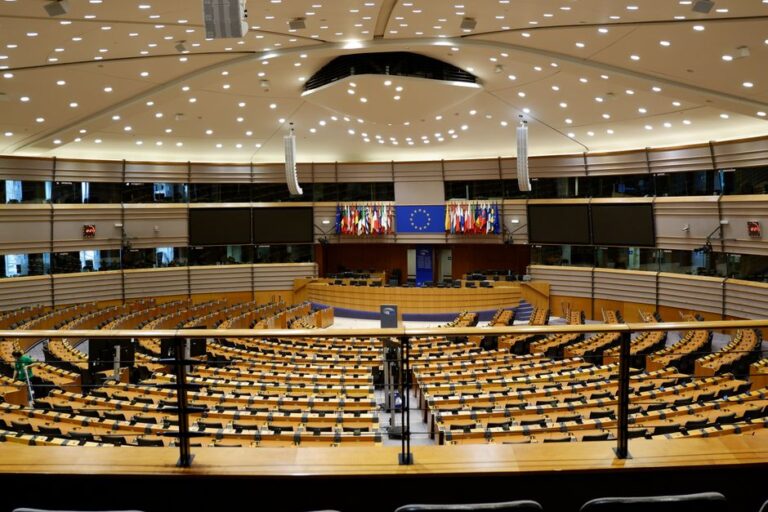
The European Union’s Foreign Affairs Council convened in Brussels in early May 2026, with High Representative Kaja Kallas chairing what has become one of the most consequential periods of EU foreign policy in recent decades. The agenda, according to the official Council programme published on 30 April, centred on three intertwined files: Russia’s war of aggression against Ukraine, the conflict in the Middle East and its impact on European security, and the updated EU threat analysis — the bloc’s first systematic re-baselining of strategic risks since the Iran war erupted on 28 February.
Ukraine: €194.9 billion in support to date
The headline figure dominating the Council’s Ukraine debate is striking: €194.9 billion in total EU support to Kyiv since the start of the full-scale invasion, including €69.7 billion in military assistance. A further €90 billion support loan has been agreed for 2026 and 2027, leveraging the windfall profits of immobilised Russian sovereign assets — the so-called “Reparations Loan” mechanism that has structured EU financial support since the autumn of 2025. The May meeting was used to assess delivery and political momentum behind these commitments, particularly as the Trump administration’s reduced engagement with NATO frameworks places more weight on European leadership. Volodymyr Zelensky attended the Council via videoconference, as has become the norm for the major monthly checkpoint sessions.
The first EU-Syria high-level political dialogue
In a development that received little media attention but represents a substantial diplomatic shift, Kallas chaired the first EU-Syria high-level political dialogue on the margins of the Foreign Affairs Council. The reopening of formal channels with Damascus, after over a decade of de facto suspension following the 2012-2013 phase of the Syrian civil war, reflects the EU’s recognition that the post-Assad transition requires direct European engagement on humanitarian, reconstruction and migration files. The dialogue is expected to evolve into a structured framework over the second half of 2026, with the Cypriot Presidency working closely with the European External Action Service. Kallas, in remarks reported by the Council’s communication services, framed the dialogue as “part of the EU’s wider rebalancing of Mediterranean policy in light of the energy and security architecture emerging from the Middle East war.”
The Coalition for the Return of Ukrainian Children
In a separate meeting on the margins of the Council, Kallas co-chaired the high-level meeting of the International Coalition for the Return of Ukrainian Children. The Coalition, established in 2023, coordinates the international diplomatic, legal and humanitarian effort to identify and return Ukrainian children deported to Russia and Russian-occupied territories — a file with both immediate humanitarian and longer-term legal-political weight, given the International Criminal Court arrest warrants issued against Russian officials over the deportations. Reuters reported on 7 May that a Ukrainian negotiator was in the United States in a parallel bid to revive direct US-Russia talks on the war, suggesting the diplomatic track is moving on multiple fronts simultaneously.
The threat analysis update and EU defence readiness
Foreign affairs ministers were also briefed on the updated EU threat analysis, the strategic-foresight document used to anchor EU defence policy. Recent updates reflect the stress-test from the Iran war on EU energy supply chains, the volatility of the Strait of Hormuz, the continued Russian threat to NATO’s Eastern Flank, and rising hybrid-warfare activity targeting EU member states’ critical infrastructure. In parallel, Kallas chaired the European Defence Agency Steering Board, addressing EU military support for Ukraine and EU defence readiness. The B9 + Nordic countries summit in Bucharest on 13 May, hosted by Romanian President Nicușor Dan, will provide an additional regional dimension to the same agenda.
The Western Balkans and enlargement track
The Council also exchanged views on relations with the Western Balkans, in the context of the European Parliament committees’ parallel evaluation of progress made by Albania and Montenegro towards EU membership. The 22 April 2026 approval by EU ambassadors of an ad hoc working group to start drafting Montenegro’s accession treaty — the first such treaty since Croatia in 2013 — marked the most concrete institutional step towards expansion in over a decade. Commissioner for Enlargement Marta Kos indicated that Montenegro could conclude its negotiations by the end of 2026, with Albania targeting end-2027. The political question, repeatedly raised at the Council, is whether public opinion in major member states can sustain the political weight of the next enlargement wave.
The Middle East file: Strait of Hormuz and energy
The conflict in the Middle East remains the single most consequential external file. Brent crude prices breached $126 per barrel in late April as the Strait of Hormuz situation deteriorated, with periodic disruptions to tanker traffic. The Council exchanged views on the bloc’s energy resilience and the policy response, including the activation of the EU Energy Platform’s joint purchasing mechanism and the discussion of further sanctions if Iranian retaliation escalates. The political risk for the Cypriot Presidency is that an extended Middle East war forces a re-prioritisation of the EU’s policy agenda just months before the handover to Lithuania on 1 July.
The next foreign affairs cycle
The Foreign Affairs Council reconvenes in June 2026, with the file load expected to remain dense: the EU-Mexico summit on 22 May, the Albania-Montenegro evaluations published mid-month, the B9 + Nordic summit on 13 May, and the formal vote on the AI Omnibus deal in the European Parliament. For Kallas, who took office as High Representative in late 2024, the May calendar represents one of the most operationally demanding periods of her mandate. As one Brussels diplomatic observer summarised: “The High Representative is now arguably the EU’s most active foreign-policy actor, and the institutional architecture is rebalancing around that reality.”