European Parliament Votes Negotiating Position on 2028-2034 EU Budget: Defence, Climate and Cohesion Top the List
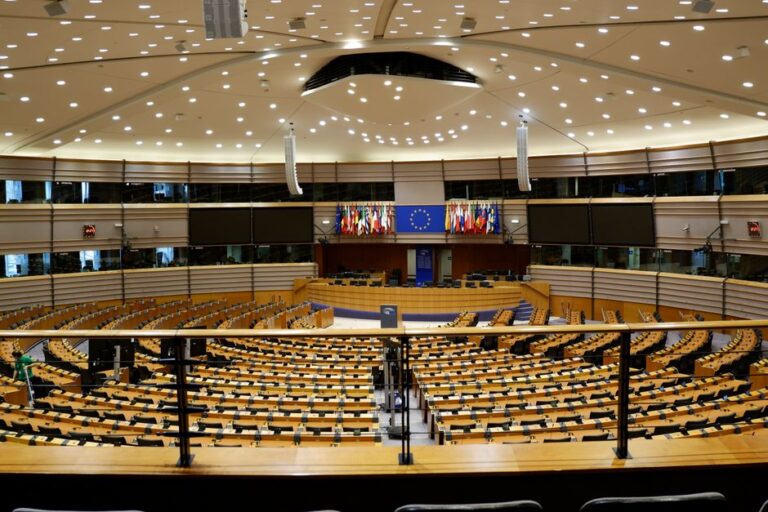
In a defining plenary vote in late April 2026, the European Parliament adopted its negotiating position on the 2028-2034 Multiannual Financial Framework (MFF) — the seven-year EU budget cycle that will shape European public spending for the rest of the decade. The Parliament, led by co-rapporteurs Siegfried Mureşan (EPP, RO) and Carla Tavares (S&D, PT), demands a substantially larger budget than the Commission’s April 2026 proposal, with priority increases for defence, climate, competitiveness, and traditional cohesion policy.
The Commission proposal
The Commission’s initial MFF proposal, published in early April 2026, totalled approximately €1.95 trillion over seven years (2018 prices), structured around five headings: Single Market and Innovation; Cohesion, Resilience and Values; Natural Resources and Environment; Migration and Border Management; and Security and Defence. A new dedicated European Competitiveness Fund, worth €580 billion, consolidates Horizon Europe, parts of EU4Health, the Innovation Fund, and several smaller instruments.
Parliament’s demands
The Parliament’s position pushes the total to €2.18 trillion — a 12% increase. Specifically, MEPs demand: a doubling of the defence budget compared to the current cycle, building on the 2025 SAFE programme; a 30% climate-spending target with binding mid-term review; full preservation of Common Agricultural Policy (CAP) envelopes despite Commission proposals to merge them with cohesion; a dedicated Ukraine Reconstruction Facility outside the MFF ceiling; and stronger conditionality linking funds to rule-of-law compliance.
The own resources fight
Underlying the headline figures is the unresolved debate on new own resources — how to fund the budget without raising member-state contributions. Commission proposals include a share of CBAM revenue (75% already allocated), a corporate-tax own resource based on a statistical reallocation of profits, an extension of the ETS-based own resource to maritime and aviation, and an own resource based on tobacco excise duties. Parliament backs all four; member states are deeply divided, with the Frugal group (Netherlands, Sweden, Austria, Denmark) opposing most.
The Recovery Fund repayment
A critical structural issue: starting 2028, the EU must begin repaying the NextGenerationEU recovery fund — the €750 billion in joint borrowing issued during the COVID-19 crisis. Repayment, estimated at €25-30 billion annually, threatens to crowd out other priorities unless new own resources are agreed. Commissioner for Budget Piotr Serafin has framed this as the “existential test” of the new MFF.
National reactions
Member-state positions are crystallising. Germany and France back the larger envelope but disagree on internal allocation: Berlin pushes for defence and competitiveness; Paris for industrial policy and CAP. Poland and Italy demand cohesion preservation. The Frugal group rejects the headline increase and insists on a real-terms freeze. Hungary uses the negotiations as leverage on rule-of-law conditionality. The Council will adopt its own negotiating mandate by autumn 2026.
The trilogue ahead
With Parliament and Commission positions on the table, negotiations enter the most consequential trilogue of the decade. Final adoption is targeted for the second half of 2027, allowing implementation from 1 January 2028. If negotiations fail or are seriously delayed — as happened in 2020 — the existing 2021-2027 MFF would be extended provisionally, postponing structural reforms by another budget cycle.