EU’s AI Envoy Calls on Commissioners to Harness Technology for Economic Revival
The European Union’s newly appointed artificial intelligence adviser is pressing the bloc’s top officials to treat AI as a lever for economic renewal, urging commissioners to prioritise productivity gains over an increasingly costly race to match the frontier models being developed in the United States and China.
According to reports, the AI envoy — who was installed as part of the new Commission’s push to take a more proactive stance on technology governance — has begun a series of consultations with Brussels decision-makers aimed at embedding artificial intelligence tools directly into policymaking and public administration. The initiative represents a notable shift in emphasis: rather than focusing almost exclusively on regulation, as the EU has done in recent years with the landmark AI Act, the Commission is now being encouraged to champion concrete applications of the technology.
Productivity, Not Prestige
The envoy’s central argument, as conveyed through official channels, is that the bloc’s persistent competitiveness gap — widely diagnosed in recent assessments of Europe’s economic trajectory, including last year’s high-profile Draghi report — cannot be closed by regulatory frameworks alone. Artificial intelligence, applied thoughtfully across sectors such as healthcare, manufacturing, logistics and public services, could deliver the kind of productivity uplift that has so far eluded European economies, officials said.
Crucially, the adviser is said to be steering Brussels away from the notion that Europe must build its own large-scale generative AI models to compete directly with offerings from American technology giants or Chinese state-backed programmes. That ambition, critics have long argued, would demand levels of capital investment and computing infrastructure that European players are poorly positioned to match in the near term. Instead, the recommendation is to focus on adopting and adapting existing AI capabilities to solve specific, high-value problems within the European economy.
The approach reflects a broader debate within European policy circles about where the bloc’s comparative advantage in the AI era actually lies. Some officials and analysts contend that Europe’s strength is less in building foundational models and more in applying technology responsibly within well-regulated markets — particularly in sectors where trust, data privacy and accountability matter to consumers and businesses alike.
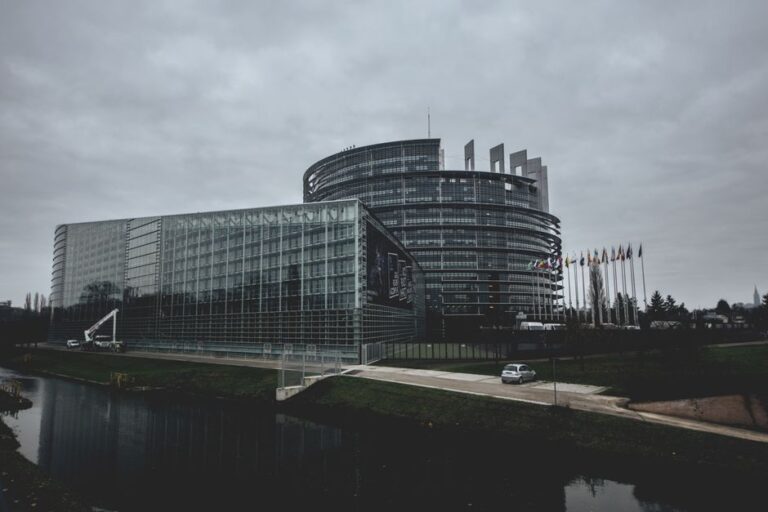
The envoy’s push comes at a sensitive moment for EU economic governance. Growth across the eurozone has remained sluggish, investment in deep technology has lagged behind transatlantic peers, and demographic pressures are beginning to weigh on labour productivity in several member states. Against that backdrop, the case for AI-driven efficiency improvements has taken on renewed political urgency inside the Berlaymont.
Whether commissioners will act swiftly on the recommendations remains to be seen. The EU’s institutional machinery has historically moved cautiously when it comes to adopting new technologies internally, and securing consensus among member states with varying levels of digital readiness presents its own challenges. Nevertheless, the appointment of a dedicated AI envoy signals that the Commission’s leadership is at least willing to elevate the conversation beyond compliance and into the realm of active deployment. For a bloc still searching for its economic footing in a rapidly shifting global landscape, that may prove a significant step.