Sweden Poised for Centre-Left Government as Andersson Eyes Prime Ministership
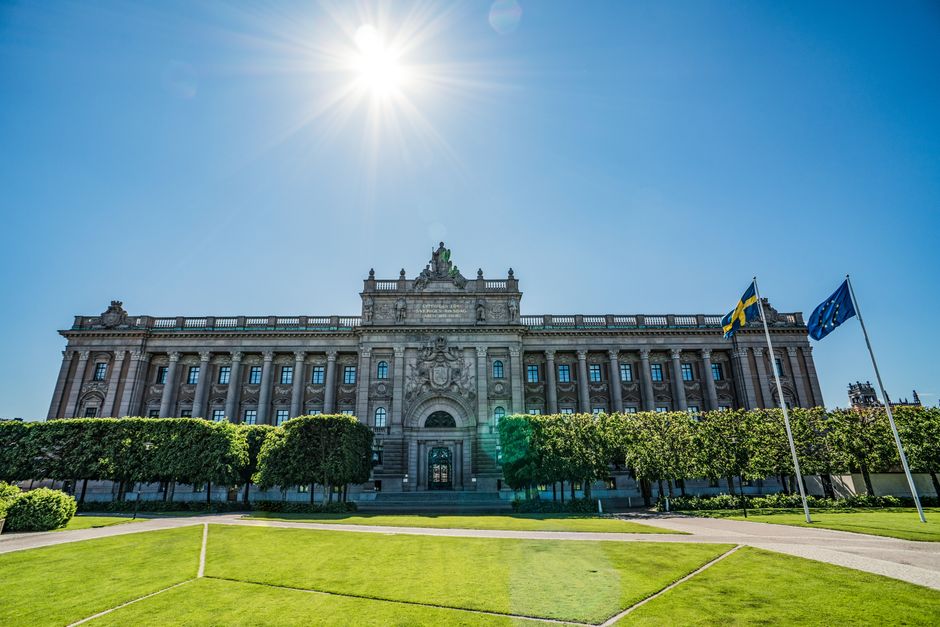
Sweden appears set to shift back toward centre-left governance after exit polls indicated a victory for the left-leaning bloc in the country’s general election, with Social Democrat leader Magdalena Andersson emerging as the likely next prime minister. The results, while still subject to final verification, suggested a narrow but decisive margin in favour of the red bloc over its centre-right rivals, according to reports from Stockholm.
Andersson, who has led the Social Democrats through a competitive campaign focused on welfare, security, and economic stability, would become one of Sweden’s most prominent political figures if she secures the parliamentary support necessary to form a government. The outcome marks a potentially significant moment for Scandinavian politics, where shifting coalitions and tight electoral margins have made governance increasingly complex in recent years.
The Swedish result came amid a broader week of political activity across Europe, with several other developments drawing attention from observers and policymakers alike.
A Busy Week Across the European Political Landscape
In Ireland, former United States President Donald Trump concluded a two-day visit to Dublin, a trip that attracted considerable media attention and generated discussion about transatlantic relations at a time when Europe continues to recalibrate its ties with Washington. The visit, which touched on themes of heritage and diplomacy, drew both supporters and protesters, officials said, reflecting the polarising nature of the former president’s continued prominence on the world stage.
Meanwhile, in Hungary, Viktor Orbán was reported to be returning to the forefront of his country’s political arena, a development that will be closely watched by European Union institutions given the long-running tensions between Budapest and Brussels over issues including the rule of law, media freedom, and Hungary’s foreign policy orientation. Orbán’s political resilience has repeatedly confounded predictions of his decline, and his renewed visibility is expected to keep Hungary near the top of the EU’s agenda in the months ahead.
Adding to the week’s diplomatic texture, Latvian Prime Minister Andris Kulbergs offered his perspective on regional security and Baltic affairs, according to reports. Latvia, as one of the EU and NATO member states bordering Russia, has consistently advocated for a firm collective European response to security threats, and Kulbergs’s remarks were seen as reinforcing that position at a moment when the continent remains acutely focused on the situation in Eastern Europe.
Taken together, the developments paint a portrait of a European political environment in constant motion, with electoral contests, diplomatic engagements, and long-standing institutional disputes running in parallel. Sweden’s potential shift to the left, if confirmed by final results, would add another dimension to an EU landscape in which member states are governed by an increasingly varied array of political forces, from progressive coalitions in the north to nationalist governments in the east.
Final vote counts in Sweden were expected to be released in the coming days, with coalition negotiations anticipated to follow swiftly given the slim margins involved. Political analysts noted that forming a stable government could prove challenging even for the winning bloc, given the fractured nature of the current parliamentary arithmetic.