Ukraine Marks Independence Day With Parade of Drones and Battlefield Robots
Ukraine’s 35th Independence Day celebrations took an unmistakably forward-looking turn this year, as Kyiv replaced the traditional procession of soldiers and heavy armour with an unprecedented display of autonomous and remotely operated military technology — a choreographed demonstration of the tools that have reshaped modern warfare since Russia launched its full-scale invasion in February 2022.
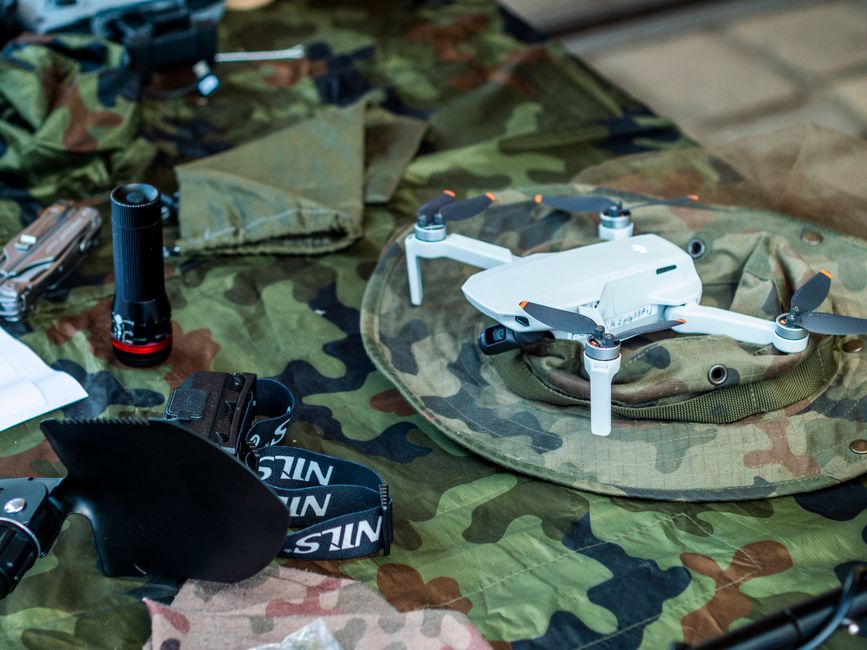
Ground-based robotic platforms rolled through the streets of the capital, while naval drone vessels navigated the Dnipro river in formation and unmanned aerial vehicles traced patterns across the Kyiv skyline. The display was widely interpreted as a deliberate signal, both to domestic audiences and to international partners, that Ukraine has transformed itself into a frontline laboratory for 21st-century military innovation.
From the Trenches to the Parade Ground
The technologies on show are not merely ceremonial. According to reports, many of the systems exhibited have seen active deployment along the front lines, where Ukrainian forces have used drone warfare extensively to offset disadvantages in troop numbers and conventional artillery stocks. Naval drones, in particular, have been credited with a series of significant strikes against Russian naval assets in the Black Sea, effectively curtailing Moscow’s maritime dominance in the region without Ukraine possessing a traditional surface fleet of comparable strength.
Ground robotics, while still maturing as a battlefield category, are increasingly being tested in reconnaissance and logistics roles, with some units reportedly capable of carrying supplies or evacuating wounded personnel under fire. Officials have pointed to the rapid iteration of these systems — driven by a combination of state investment, private Ukrainian technology firms and international support — as one of the country’s most significant wartime achievements.
The decision to centre the Independence Day parade around unmanned systems rather than conventional military hardware carries clear symbolic weight. It positions Ukraine not as a nation dependent on weapons transferred from Western stockpiles, but as an active developer and exporter of military technology in its own right. Several Ukrainian drone manufacturers have attracted international attention and, according to reports, inquiries from allied governments seeking to understand or procure the systems Ukraine has developed under combat conditions.
Analysts following the conflict have noted that the pace of drone development on both sides of the front line has accelerated dramatically over three years of fighting, with each innovation met by countermeasures and then further adaptation. Ukraine’s public showcase of its current capabilities therefore reflects only a portion of what is believed to be in development or already deployed in classified configurations.
The broader geopolitical context lends the parade additional resonance. With European NATO members rapidly expanding their own drone and autonomous systems programmes, and with ongoing debates about the future shape of military aid to Ukraine, Kyiv’s demonstration serves as a timely reminder of the battlefield knowledge Ukraine has accumulated — experience that no allied nation has acquired at comparable scale or intensity.
For ordinary Kyiv residents who lined the streets and riverbanks, the display offered a glimpse of how profoundly the nature of conflict has changed since the country last marked a peacetime Independence Day. Whether the robots and drones on parade represent the decisive edge Ukraine seeks, or simply one chapter in a longer and still unresolved struggle, remains an open question — but the message from the Ukrainian state was clear: the country is betting on technology as a cornerstone of its future security.