Alpine Village of Kandersteg Braces for Life Beneath a Crumbling Mountain
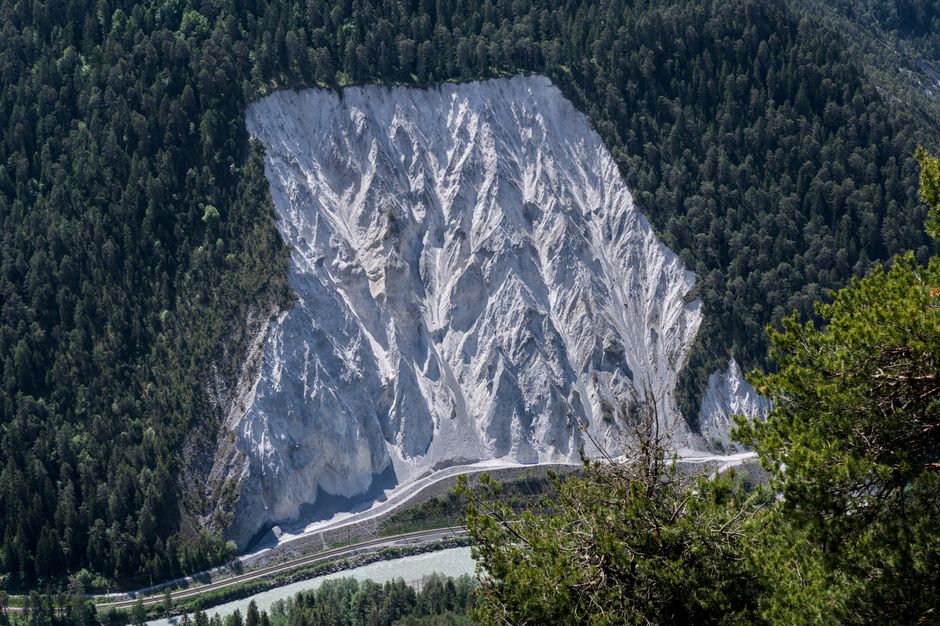
A small Swiss village nestled deep in the Alps has become an emblem of a growing crisis facing mountain communities across Europe: the slow, relentless destabilisation of the peaks that define their landscape. Kandersteg, a scenic settlement in the Bernese Oberland region, sits in the direct path of a potentially catastrophic rockfall from the Spitze Stei rock formation looming above it, leaving residents and scientists alike on edge.
The Spitze Stei formation has long been monitored for signs of movement, but according to reports, concern has intensified in recent years as climate-driven changes accelerate the deterioration of the mountain’s structural integrity. Should a significant portion of the rock mass give way, the resulting landslide could cause severe damage to the village and surrounding infrastructure below.
Climate Change Turns Stable Ground Into a Moving Target
Scientists point to two interconnected processes as the primary culprits behind increasing mountain instability across the Alpine arc. First, the retreat of glaciers — which have historically acted as buttresses for steep rock faces — is removing critical physical support from slopes that have remained intact for centuries. Second, and perhaps less visibly, the thawing of permafrost deep within mountain rock is weakening the internal bonds that hold seemingly solid formations together.
As global temperatures continue to rise, these processes are expected to intensify. The Alps, which are warming at roughly twice the global average rate according to research into the region, are particularly vulnerable. Officials and geologists tracking conditions across Switzerland, Austria, Italy and France have warned that Kandersteg is far from an isolated case — dozens of Alpine communities face analogous risks as permafrost zones shift upward and glaciers shrink year on year.
For the inhabitants of Kandersteg, the threat is not abstract. The village, which draws visitors for its hiking trails, winter sports and traditional architecture, must contend with the psychological and practical weight of living beneath a formation that scientists describe as inherently unpredictable. Monitoring equipment has been installed on the rock face to track movement in real time, and local authorities are said to have contingency plans in place, though the precise nature of emergency protocols has not been fully detailed in public reporting.
The situation raises difficult questions about the long-term habitability of certain Alpine settlements and about who bears responsibility — financially and politically — for protecting communities that have existed in these valleys for generations. Infrastructure investment, early-warning systems and, in some cases, managed relocation are all being discussed at cantonal and federal levels in Switzerland, though no comprehensive national framework has yet emerged.
Across the broader European context, the plight of Kandersteg underscores the very tangible, localised consequences of a warming climate that policy debates can sometimes reduce to statistics and projections. Mountain villages that once seemed timeless fixtures of the European landscape are increasingly confronting the possibility that the ground beneath them — quite literally — may not hold. For now, residents of Kandersteg continue their daily lives, acutely aware that the mountain above them is not as permanent as it once appeared.