
Anthropic Chief Breaks with Silicon Valley Consensus on Open AI Models, Urges Harder Line on China
The chief executive of artificial intelligence company Anthropic has distanced himself from the prevailing mood among American technology leaders, arguing that while cheap and widely accessible AI models should not be outlawed, the United States must take a far tougher stance on the transfer of advanced AI capabilities to China.
Dario Amodei, who co-founded Anthropic after leaving OpenAI, has carved out a notably cautious position in an industry that has recently embraced so-called open-weight models — AI systems whose underlying parameters are made publicly available, allowing anyone to download, modify, and deploy them at minimal cost. The release of such models, particularly from Chinese laboratory DeepSeek earlier this year, sent ripples through global technology markets and prompted widespread debate about the future of AI development.
While many of his peers in the American technology sector have welcomed the proliferation of low-cost AI tools as a democratising force, Amodei has repeatedly sounded notes of caution, insisting that the risks attached to making powerful AI freely available deserve more serious scrutiny than they are currently receiving. According to reports, he continued that line of argument this week, stopping short of calling for an outright ban on open-weight models but making clear he views them with considerable wariness.
A Distinct Voice on National Security and AI Governance
Where Amodei has been more emphatic is on the question of China. He has argued that the United States and its allies should act decisively to prevent Beijing from acquiring the chips, software, and expertise needed to develop frontier AI systems — those at the very edge of current capability. This position aligns with ongoing efforts by Washington to restrict semiconductor exports to Chinese firms, though Amodei is understood to favour measures that go considerably further than existing controls.
The stance puts Anthropic’s chief in an unusual position relative to other prominent figures in the technology sector, several of whom have publicly praised the emergence of capable, inexpensive models as evidence that AI progress cannot and should not be slowed. Critics of export controls and regulatory intervention have argued that attempting to contain AI development abroad is both futile and potentially damaging to the open exchange of scientific knowledge.
Amodei’s more guarded outlook reflects a broader philosophy at Anthropic, which has positioned itself as a safety-focused laboratory and has been more willing than some rivals to engage with regulators and policymakers on questions of risk. The company has testified before legislative bodies on both sides of the Atlantic and has advocated for governance frameworks that take seriously the possibility of advanced AI causing large-scale harm.
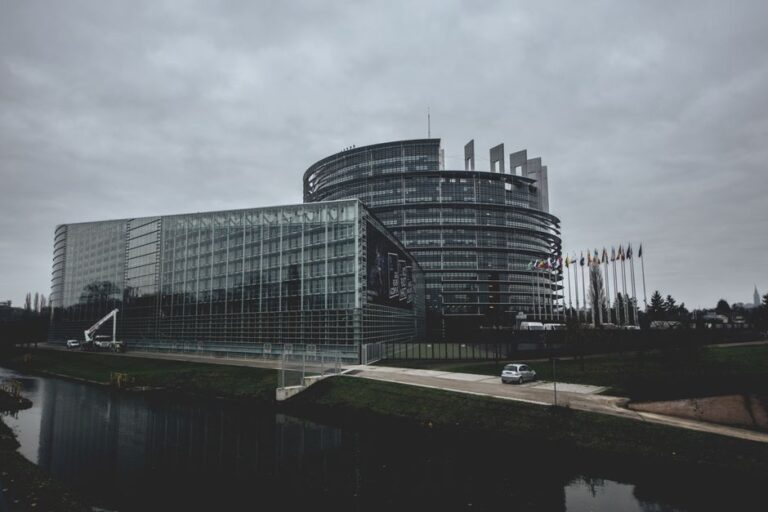
For European policymakers, who are in the midst of implementing the world’s first comprehensive AI regulatory framework, the debate carries particular relevance. The EU AI Act, now entering its enforcement phase, draws distinctions between different categories of AI risk and places specific obligations on developers of the most powerful systems. How regulators and legislators choose to treat open-weight models — and whether they accept arguments about national security as a basis for trade restrictions — will be among the more consequential decisions shaping the continent’s AI landscape in the years ahead.
Amodei’s willingness to diverge publicly from the consensus among his industry counterparts suggests the technology sector remains deeply divided over how to balance innovation, accessibility, and security as AI capabilities continue to advance rapidly.