Chernobyl Forty Years Later: How Europe’s Nuclear Safety Regime Was Built — and What Remains to Be Done
On 26 April 2026, Europe marked the 40th anniversary of the Chernobyl nuclear disaster — the worst civil nuclear accident in history, whose radioactive plume drifted across borders that the Soviet authorities initially refused to acknowledge. Four decades later, the disaster has shaped European nuclear safety regulation, energy policy debates, and a complex political relationship with nuclear power that is again under intense scrutiny in the current geopolitical environment.
What happened
At 1:23 a.m. on 26 April 1986, a botched safety test triggered a steam explosion and reactor fire at Unit 4 of the Chernobyl Nuclear Power Plant in Soviet Ukraine. Released radioactivity totalled approximately 5,200 PBq, the equivalent of around 400 Hiroshima bombs in radiological terms. Two plant workers died on the night of the accident; 28 first responders died from acute radiation syndrome within months. The Chernobyl Forum estimates eventual cancer-related deaths at around 4,000-9,000, although epidemiological studies continue. The 30-kilometre Exclusion Zone remains in place.
The EU response: building a safety culture
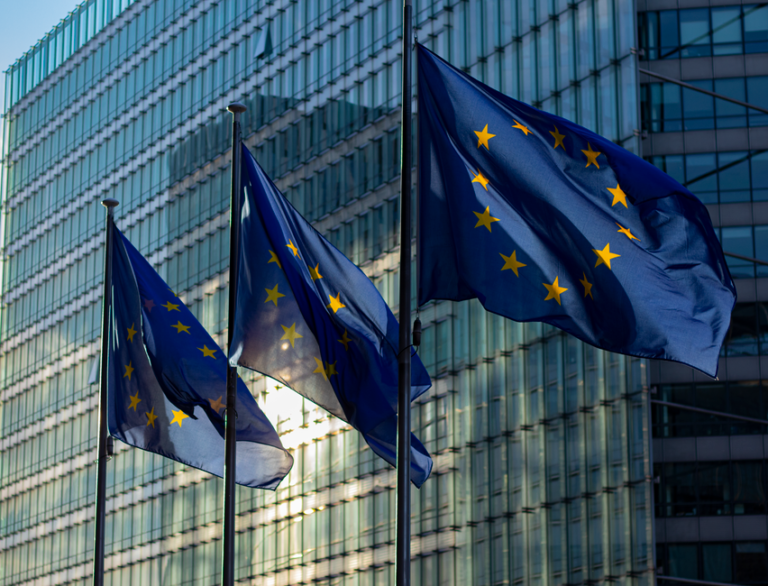
Chernobyl forced a fundamental rethink of nuclear safety in Europe. The European Atomic Energy Community (Euratom), established in 1957 but with relatively soft enforcement, was reinforced through successive directives. The 2009 Nuclear Safety Directive, revised after the 2011 Fukushima accident, requires national safety authorities to be functionally independent of operators, mandates ten-yearly periodic safety reviews of all reactors, and obliges ‘continuous improvement’ rather than fixed standards. The 2014 amendment introduced an explicit objective of “preventing accidents and avoiding the release of radioactive material.”
Stress tests and modernisation
Following Fukushima, the EU conducted comprehensive stress tests on all 132 reactors operational across the bloc and in Switzerland. Tests examined natural-hazard resilience, severe-accident management and on-site/off-site emergency response. Investments of more than €25 billion have followed across the EU, financing back-up cooling systems, mobile generators, filtered venting, and reinforced containment structures. The 2020 Topical Peer Review focused on management of ageing for reactors approaching or exceeding 40 years of operation — a category covering most of the EU’s installed fleet.
The Zaporizhzhia question
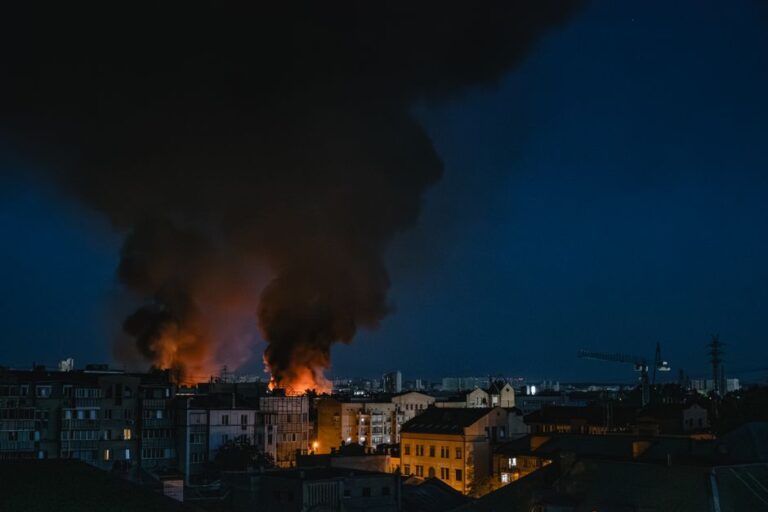
Chernobyl’s anniversary takes on new urgency in 2026 because of the ongoing situation at the Zaporizhzhia Nuclear Power Plant in southern Ukraine, occupied by Russian forces since March 2022. The IAEA maintains a permanent presence at the plant; all six reactors are in cold or hot shutdown. EU foreign policy has consistently demanded the demilitarisation of the site, citing Chernobyl as the cautionary precedent. The European External Action Service produced detailed contingency planning for a Zaporizhzhia incident throughout 2025, including cross-border response protocols.
The energy security debate
Forty years after Chernobyl, the EU’s relationship with nuclear power is more contested than ever. The Commission’s Strategic Industrial Plan for Nuclear, presented in March 2026, acknowledges nuclear as a critical low-carbon technology and includes Small Modular Reactors (SMRs) in the EU industrial alliance framework. Twelve member states — France, Czech Republic, Slovakia, Hungary, Bulgaria, Romania, Poland, Slovenia, Finland, Sweden, Belgium and the Netherlands — actively pursue new nuclear build. Germany, Austria, Luxembourg, Spain and Portugal continue to oppose nuclear expansion in EU policy.
The unfinished cleanup
At the Chernobyl site itself, the New Safe Confinement — the €1.5 billion arch funded primarily by EU contributions and the European Bank for Reconstruction and Development — was completed in 2016 over the original 1986 sarcophagus. Decommissioning of Unit 4 is projected to take until 2065 at the earliest. The exclusion zone has become an unintended wildlife refuge but remains uninhabitable for human settlement; about 100 self-settlers continue to live there in defiance of regulations. The forty-year mark is a reminder that the consequences of nuclear accidents extend across generations — a fact that defines both the safety culture the EU has built and the public skepticism that any nuclear renaissance must address.